
Children tend to enjoy exercises that require physical activity, creativity, and exploration. Interactive math teaching provides for sensory experiences, both seeing, hearing, and moving. Learning becomes vivid through the active learning techniques where children can touch, talk, observe, and experiment. Other notable benefits include increased retention as well.
Educational games for children promote repetition without monotony. The child learns to add up several times without realizing that they are learning.
Multi-sensory learning helps make connections in the brain since children use multiple senses in their learning.
Interactive Math Teaching Techniques for Kids in Classrooms and Homes
The concepts better in their memories. Through this process of interactive learning, children can improve their number sense, develop mental mathematics abilities, focus, and logic. Hence, they consider mathematics to be an applicable task for everyday life.
Why Kids Learn Math Better Through Interactive Activities
Teaching kids math does not have to be hard or boring. Teachers and parents discover modern methods of teaching kids mathematics include the concept of interactive learning. Where in kids do not have to solve mathematical equations. Recent research shows that kids who learn through interaction and experience in math lessons, stories, games, solving, etc., retain more effectively.
Fun games eliminate math fears. Most students get scared of errors during normal class lessons, while games help create a comfortable atmosphere and excitement of learning, rather than a scary and fearful one. The more students complete small assignments and have success in them, the more confidence they develop towards the subject.
One more great advantage of educational games is memory improvement. In children’s educational games, repetitions become enjoyable, not monotonous. A child can repeatedly do additions without even noticing.
Make Math Part of Everyday Life
Among the easiest ways of making mathematics interesting is applying mathematics to daily activities.
Grocery Shopping Math
Mathematics becomes easier to grasp when children can observe its practical implications. Grocery shopping offers great chances for mathematics learning through various activities. Parents can have their children count fruits, compare prices, estimate totals, or compute discounts.
Cooking and Baking Activities
Cooking involves children learning about measurements, fractions, time, and order. Measurement through recipes also helps learn about fractions such as half and quarter. Following instructions through cooking also helps children improve their focus and ability to solve problems. For instance, doubling recipes can be used to introduce children to fractions. They will be able to figure out how many spoons or cups they require for additional people. Cooking also allows learning about temperature and time.
Travel and Outdoor Maths
Outdoor activities provide interesting situations in which learning strategies can be employed. Parents can encourage their kids to count trees, stairs, cars, or signs along the way. Learning how to estimate distance and time will help improve their math abilities as well.
Hunting for treasures is yet another suggestion. Children can use addition, subtraction, or measurement skills in finding treasures. This way, children learn by doing and having fun at the same time.
Fun Math Games for Kids
Games are among the most effective playful learning techniques because they motivate children without pressure. Educational games for kids improve focus, speed, memory, and teamwork.
Board Games
Traditional board games incorporate elements of math. Monopoly enhances money management and calculation skills. Sudoku sharpens reasoning and helps recognize patterns. Playing dominoes boosts numerical skills.
Card Games
Card games are a simple way of making learning math entertaining. An addition war is one card game where players compete to solve sums and score higher. Multiplication racing games assist in memorizing multiplication facts and games that involve matching assist in building recognition ability. Card games are affordable, mobile and don’t require any screen at all.
Online Interactive Math Games
Digital tools can also support child-friendly math education when used carefully. Puzzle apps, math adventure games, and interactive tools keep kids engaged. Interactive online games often provide rewards, levels, and visual feedback, which motivates children to continue practicing. Limiting screen time is important for healthy learning habits.
Hands-On Math Activities
Experiential learning makes difficult concepts easier to grasp by using objects. Working with objects increases spatial awareness and memory.
Building with Blocks and LEGO
The use of blocks and LEGOs builds concepts such as shapes, symmetry, measurements, and patterns. It allows the child to develop creative thinking and critical thinking skills, as well as improving their ability to fit pieces together. Activities that the educator or caregiver may create include counting blocks, comparing the height of buildings, and measuring blocks.
Abacus Learning
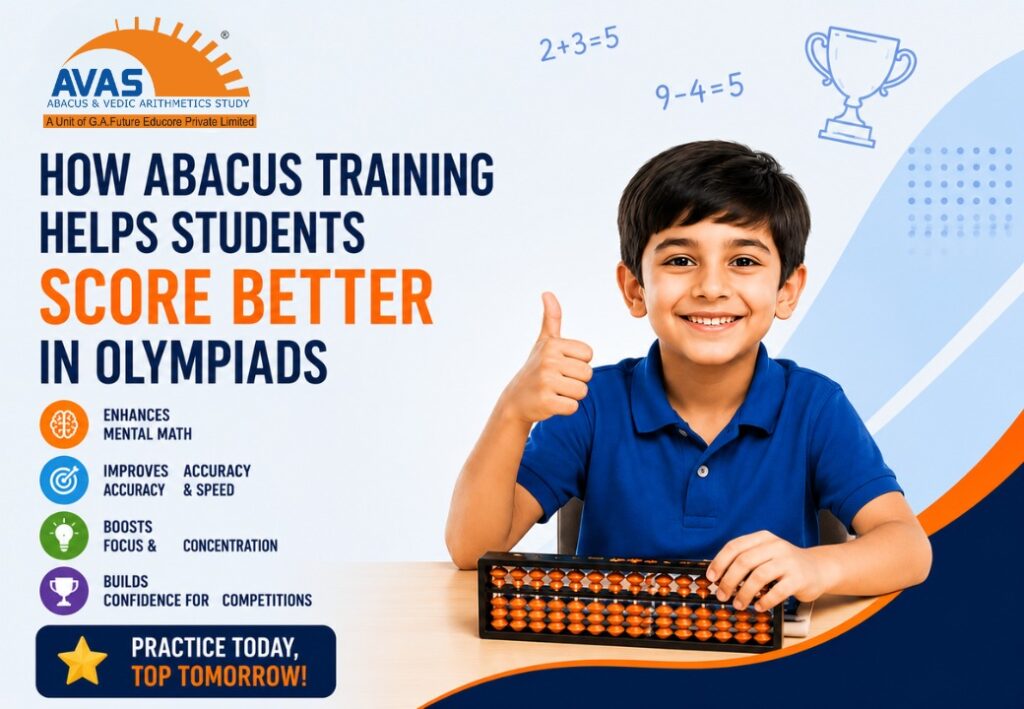
Abacus classes are one of the most attractive ways to develop number sense and mental calculations. The visual representation of numbers by means of the abacus sharpens children’s concentration, memory, and power of calculation. Abacus training helps with whole-brain development since both hemispheres of the brain are used in performing calculations. Visualization abilities and self-confidence while solving mathematical problems are also developed with the help of abacus training. Most parents are ready to enroll their children in abacus courses as it unites all three aspects mentioned above and helps with gradual improvement of calculations.
DIY Math Crafts
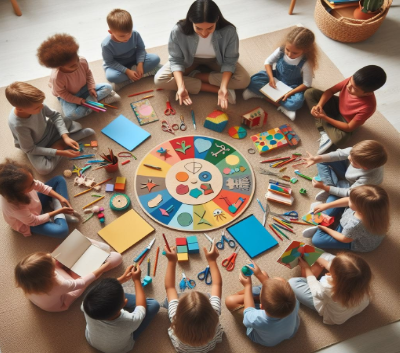
DIY crafts make math classes fun and memorable. The students can use everyday household objects to create number charts, fraction wheels, shape collages, and counting tools. Such activities are particularly effective for young learners who learn through experimenting.
Benefits of Fun Math Learning

Effective interactive mathematics lessons create positive long-term impacts not only in academic performance but also in terms of personal development. Children who engage in interesting and enjoyable activities tend to have better focus and memory. They are able to think logically because fun teaching methods help in developing problem-solving skills. Moreover, understanding is enhanced as students will not simply memorize but rather be confident at school once they understand the concepts taught. Above all, enjoyable experiences contribute to the creation of good attitudes towards learning.
Interactive Classroom Activities for Teachers
Teachers can use active learning strategies to make classroom lessons more engaging and collaborative. Group-based activities encourage teamwork, communication, and healthy competition. Math relay races combine movement with problem-solving. Students solve one question before running to the next station.
Group problem-solving games encourage discussion and critical thinking, while peer learning challenges help students explain concepts to each other. Quiz competitions and classroom puzzles also increase participation. Instead of passive listening, students become active contributors during lessons. Interactive classrooms create a positive learning environment where children feel motivated to participate.
Teaching Math for Different Learning Styles
Every child learns in their own unique ways, so there should be more than one approach used. For instance, visual learners perform better when there are graphs, pictures, colors, and other fun activities involved in the process. Learners who rely on listening benefit from singing songs, having discussions, and storytelling, while those who are kinesthetic need some actions to keep them engaged in maths class.
Common Mistakes Parents Should Avoid
Making practice with the help of only sheets and worksheets can kill creativity. Comparing students with other people can lower down their self-confidence and make them less enthusiastic about math. Each child learns differently; therefore, being a little more tolerant can go a long way. All parents and educators working together helps to increase children’s maths performance.
Comparisons with other kids may harm confidence and motivation. All children have their own pace and require patience and encouragement. Not making use of practicality is yet another error that parents often make. For kids to fully grasp a concept, they need to see firsthand how math plays an important role in their lives.
Frequently Asked Questions
Yes, abacus is good for children. It increases the ability, concentration and brain development.
Most students start abacus classes between the age of four and fourteen. Many children also join abacus at a younger age.
Yes, abacus improves school performance because it helps to boost accurate calculation and mental availability.
Yes. Abacus classes are good for children as they develop concentration, memory, and whole-brain development.