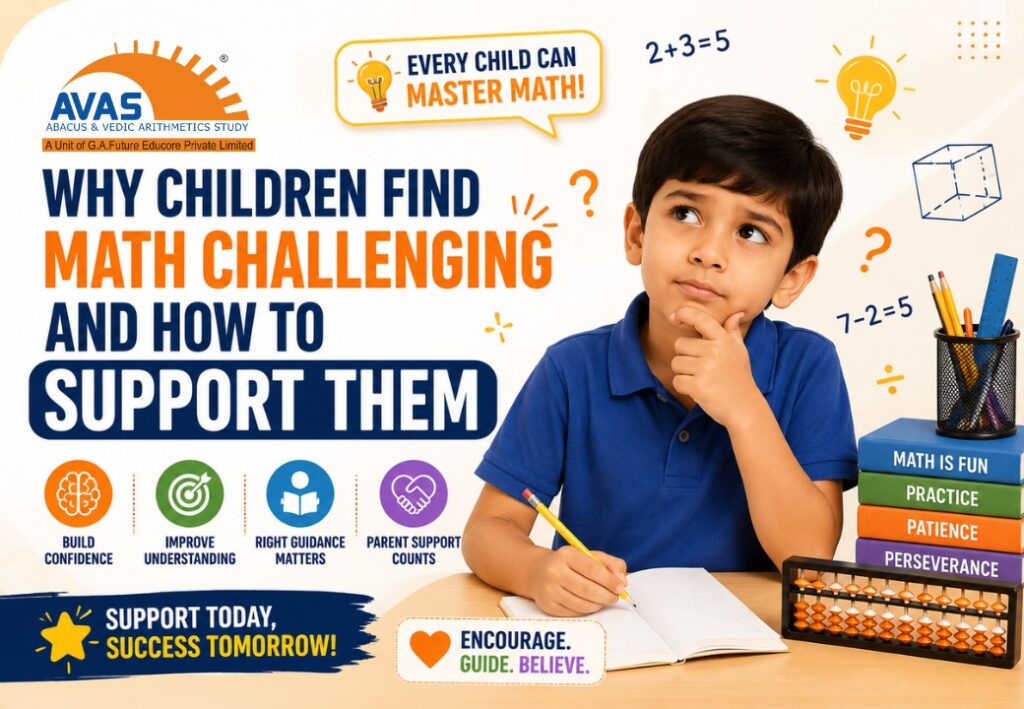

Mathematics goes beyond arithmetic as it assists students in acquiring a growth mindset through difficult tasks which allow them to understand that success comes with dedication.
- Cultivates healthy learning practices
- Develops activities that build self-confidence
- Develops resilience in children
- Facilitates skills development in solving problems
- Facilitates active learning techniques
- Educates on the importance of learning from mistakes
Help Parents and Educators Understand the Importance of a Growth Mindset in Children
A growth mindset helps children believe that abilities can be developed through effort, practice, and persistence. When parents and educators encourage this mindset, children become more willing to take on challenges and learn from their experiences.
A strong growth mindset supports:
- Positive learning habits
- Confidence-building activities
- Resilience among children
- Development of problem-solving skills
- Learning through active engagement
- Mistakes as learning tools
- Positive cognitive development among children
Those children who have a growth mindset know that mistakes are an inherent part of learning and not failures. They are able to gain confidence and become resilient by becoming capable of…
How Math Learning Develops Resilience, Confidence, and Problem-Solving Skills
Learning mathematics does more than teach students how to deal with numbers; it assists children in acquiring life skills that are important for development.
1. Building Resilience in Children
When doing math, children encounter problems that require patience and determination. Solving math problems enables kids to understand that obstacles are part of learning, which makes them resilient enough to keep trying until they achieve success.
2. Boosting Self-confidence Through Activities
Achieving success at solving math problems boosts the self-esteem of children. Math problems allow children to succeed, thus helping them build self-confidence in the learning process.
How Positive Learning Experiences Reduce Fear of Mistakes and Failure
Positive learning experiences play a crucial role in reducing children’s fears of making mistakes and failures. A supportive environment encourages kids to realize that mistakes are an inherent part of learning, rather than something they should be ashamed of.
In math, children are often fearful because of the possibility of being wrong while finding answers to math questions. But when adults encourage efforts, progress, and the process of problem-solving, but not the results alone, children feel more adventurous and willing to experiment with different methods.
Activities like Abacus and Vedic Math, math puzzles, and computer games make learning mathematics much easier and joyful. With time, children begin to view challenging concepts as a chance to grow rather than as problems to be solved.
Position Math and Abacus Learning as Tools for Building Lifelong Learning Habits

Learning math and abacus offers many other advantages beyond enhancing calculation capabilities. In particular, it promotes habits and mindsets that facilitate continuous personal development.
1. Promotes Consistent Practice
Regular practicing is necessary for improving the skills and acquiring the knowledge associated with abacus and math. This helps students learn to develop good learning habits and learn independently.
2. Nurtures a Growth Mindset
By realizing that their abilities are not set in stone from birth, and as children solve difficult problems, they begin to understand that abilities can be developed over time rather than being fixed from birth.
3. Develops Critical Thinking and Problem Solving Skills
Problem-solving skills are also useful in other areas and may prove beneficial for further career development.
4. Develops Self-confidence via Success
Every mathematical concept learned and problem solved by children gives them a feeling of success. Such experiences increase their confidence and encourage them to learn more.
5. Encourages Learning from Mistakes
Mistakes are common in math lessons. Students learn how to find mistakes, correct them, and improve their knowledge. It is an important skill because students will be able to adapt and learn faster.
Real-Life Examples of Growth Mindset Learning in Mathematics
1. Learning Multiplication by Practicing
The child is having difficulties remembering multiplication tables and keeps making errors while doing so. Instead of complaining about not being good at math, they practice each day using flash cards, playing with an abacus, and even games.
Growth Mindset Learning Point: Skills require time and practice to develop.
2. Working Out Complex Math Problems
It is hard for a child to solve word problems in math class, and they tend to give wrong answers. However, instead of stopping, the child learns how to work out a problem in stages, understand its key elements, and apply different techniques to find the right solution.
3. Mental Calculation Skills Development through Abacus Training
Initially, the child requires much time for doing basic calculations. However, after continuous training in abacus, the child will slowly develop his concentration skills, visual imagination, and speed of mental calculations.
Growth Mindset Lesson: Improvement comes through constant practice and dedication, and not because of natural abilities.
4. Lessons from Errors during Tests
The student gets low grades when writing tests on math topics. He analyzes his mistakes and does exercises related to his mistakes; then in the following test, he manages to do better than the first time.
How Mistakes Improve Brain Development and Learning
Making mistakes is not an indication of incompetence in mathematics. Actually, mistakes are essential when it comes to brain development and acquiring knowledge.
As far as mathematics is concerned, making mistakes motivates children to critically examine the problem-solving techniques that were used. Thus, they get a chance not only to learn how to solve a particular mathematical problem but find ways to improve other skills as well.
Through tools like Abacus and Vedic Maths, they learn how to cope with and correct their mistakes. Eventually, they become resilient, confident learners.
Essential Point: Mistakes are learning opportunities. When students make mistakes in math, they learn how to think better, enhance memory and analytical skills, solve problems, and facilitate brain development.
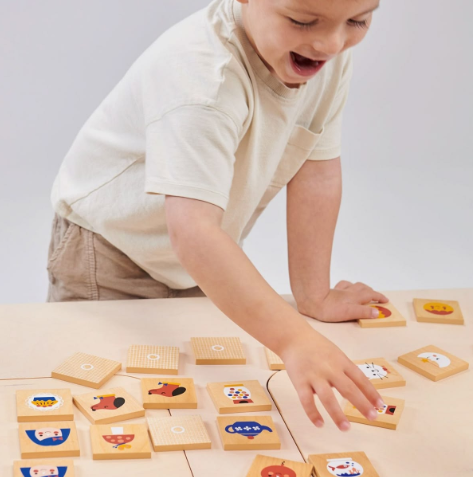
The Benefits of Memory Improvement Games for Children
Memory improvement games are a fun and effective way to support a child’s cognitive development.
1. Enhance Concentration
Memory games require attention to details and remembering information. Frequent involvement in memory games can have beneficial effects on performance at school and beyond.
2. Sharpens Short-term and Long-term Memory
Memory games that involve remembering sequences, numbers, shapes, or patterns improve memory abilities of children. Effective memories are necessary for retaining and absorbing information that can be useful.
Why Memory Development Matters in Childhood
Memory development plays an important role in the cognitive and educational development of a child. Memory helps children assimilate new knowledge, memorize information, and apply it depending on specific conditions. Adequate memory is an essential precondition for achieving success in studies and developing other cognitive skills.
1. Facilitates Learning Process and Helps Children Excel in School
Children need memory to study letters, numbers, words, mathematical formulas, and many other notions. The well-developed memory of a child helps him/her grasp information faster and remember it for later application to studies.
2. Enhances Concentration and Attention Skills
Memory and attention are interrelated skills. Developing memory helps improve children’s attention skills since both of them are essential for concentration while studying.
3. Fosters Development of Self-Confidence and Independence
Self-assuredness is developed by the achievement of certain results. If a child remembers the necessary information and succeeds in doing something without adult help, it develops self-confidence and independence.
What Are Memory Improvement Games?
Memory development plays an important role in the cognitive and educational development of a child. Memory helps children assimilate new knowledge, memorize information, and apply it depending on specific conditions. Adequate memory is an essential precondition for achieving success in studies and developing other cognitive skills.
1. Facilitates Learning Process and Helps Children Excel in School
Children need memory to study letters, numbers, words, mathematical formulas, and many other notions. The well-developed memory of a child helps him/her grasp information faster and remember it for later application to studies.
2. Enhances Concentration and Attention Skills
Memory and attention are interrelated skills. Developing memory helps improve children’s attention skills since both of them are essential for concentration while studying.
3. Fosters Development of Self-Confidence and Independence
Self-assuredness is developed by the achievement of certain results. If a child remembers the necessary information and succeeds in doing something without adult help, it develops self-confidence and independence.