
The world today has much changed from yesterday. Although it is important to have knowledge of the text, both schools and parents are finding that cognitive development of children rests on more than just fact recall. Skills affected directly by the distracted mind—such as concentrating on tasks, absorbing and recalling information in a short time, reasoning and logic—are skills that directly impact on academic achievement and lifelong achievement.
In today’s society, the mind needs to be developed early if a child is going to excel, because of the incredible speed at which information is being passed around, the amount of time spent in front of a screen, and the high demands placed on academic achievement. Skill-based learning, especially the abacus method of teaching children, provides an organized and proven route to cultivate these skills.
People who learn visualization learning technique and logical thinking skills at an early stage have a remarkable academic resilience through the educational process, not only in learning in books.
What Is Abacus Training?
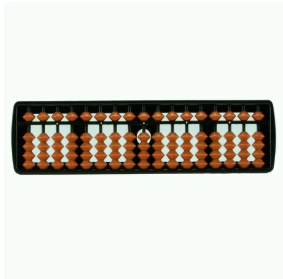
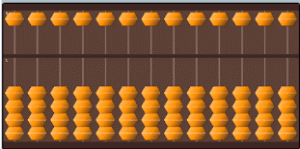
One of the oldest calculating devices used around the world, throughout many civilisations, for thousands of years is the abacus. Today, the abacus is used as a tool to assist children in learning mentally and thus becomes a formidable tool for cognitive training. Arithmetic is taught first by the children moving beads on a tangible abacus for the purpose of arithmetic and numbers representation.
Children learn to do calculations mentally, over time. A truly remarkable mental abacus stage whereby the children are able to carry out mental calculation at extraordinary speed through visualising the motion of the beads. By introducing this visualization learning method, abacus learning moves from the traditional teaching style of mathematics to a brain training course that stimulates the whole brain, not just the brain used for math, and so becomes a learning method unique to abacus learning.
Essential Skills Children Develop Through Abacus Training
Children learn many skills while they learn to use the abacus in addition to arithmetic. These are the basic abilities that kids acquire:
Improve Focus & Memory Sustained bead movements demand high concentration, strengthening working memory and attention span. | Faster Mental Calculation Children compute large sums in seconds — a skill unmatched by calculator-dependent learning. |
Logical Thinking Skills Structured number operations build step-by-step reasoning and analytical problem-solving. | Visualization Learning Mental abacus use sharpens spatial intelligence and the ability to picture abstract concepts. |
Confidence-Building Mastering challenging calculations gives children tangible proof of their own ability. | Academic Performance Improved number sense and concentration translate directly into better grades across subjects. |
How Abacus Supports Whole-Brain Development
One of the best things about abacus training is that it can be proven to impact whole brain development. Tasks in regular school are predominantly left brained tasks that are language, logical, and/or sequential. Unlike other training methods, the Abacus method trains both half of the brain at once.
LEFT BRAIN ACTIVATED • Numerical calculation • Logical sequencing • Analytical reasoning • Language of numbers | RIGHT BRAIN ACTIVATED • Visual-spatial imagery • Creative problem-solving • Intuitive thinking • Pattern recognition |
Other learning strategies, like those of Maria Montessori, also emphasize the need for activity and brain stimulation in the early years’ learning process, and this is the essence of abacus training. In the same activity children use their motor coordination, spatial thinking and numerical processing skills to do both physical and mental operations with bead
Academic Benefits of Abacus Training
The effects of regular use of the abacus are well documented as improving children’s academic progress. Children learn in a concrete and pictorial way an intuitive sense of numbers: place value, carry and borrow. This fluency with numbers helps them to speed up their school maths, science and even logical learning, such as coding.
Concentration and working memory improvement also helps with reading comprehension, writing and exam performance. Teachers and schools value these skills and children have been discovered who have benefitted from abacus practice: they are able to keep their focus, to remember multi-step instructions, and to do work right under time pressure.
Best Age to Start Abacus Training
The brain is highly malleable and takes its shape in first few years of life. From research and practice, one can see that the most sought after age for children to learn using the Abacus is 5-14 years.
4–5 years Foundational readiness | 5–10 years Optimal learning window ★ Best Age | 10–14 years Strong benefit period | 14+ years Speed & exam prep |
From 5-10 years of age, children can learn the skills needed in the brain’s most neuroplastic time, when it is rewiring rapidly. Older children and adolescents still benefit, though, particularly regarding the speed with which they can take exams and their mental agility.
Why Parents Are Choosing Abacus Programs Today
Academic benefits to children as they regularly learn the abacus have been found. Children have a very intuitive understanding of numbers, knowing place value and being able to carry and borrow in visual and concrete not abstract terms. This number sense enhances mathematical development within the school curriculum, not just in maths, but also in science and logical tasks such as coding.
Concentration and working memory enhancements also have a positive effect on reading comprehension, writing and exams. Children who play regularly with the abacus, show enhanced ability to maintain focus, adhere to multiple step instructions and execute accurately within time limits, which is key in cognitive development and is appreciated by teachers & schools.
Life Skills Children Gain Through Mental Math Training
Abacus training is not just in the classroom! When learning and mastering a challenging skill, important life attributes are gained:
Decision-Making Skills Quick calculating helps children to make quick decisions. | Patience & Resilience Children learn through levels that with perseverance they can master. |
Problem-Solving Confidence Solving complex sums and overcoming them develops a ‘ I can do this’ attitude. | A positive attitude towards challenges Children develop the attitude that difficult problems are fun puzzles. |
Signs Your Child May Benefit from Abacus Classes
Although all children are unique, some children suggest they would benefit from being a part of an abacus programme:
✗ Easily distracted | ✗ Stresses when asked to solve a problem involving numbers and calculations |
✗ Has trouble with multi-step instructions | ✗ Avoids challenges if they seem difficult |
✗ Is easily distracted by screens and gadgets | ✗ Self-confidence in the classroom |
Meanwhile, gifted and inquisitive children get a tremendous boost – abacus training is challenging for high achieving children, develops speed and develops a deep mathematical insight that helps children excel in competitive exams.
Frequently Asked Questions
Q: Children develop skills in abacus training include: |
Abacus Education for Children trains a wide spectrum of abilities such as speed of mental calculation skills, concentration, memory, logistical thinking skills, visualization learning technique, spatial intelligence and confidence building activities for Children. These include improved academic outcomes and valuable life skills like patience, resilience, and decision-making. |
Q: Can training the abacus be helpful other than in maths? |
Absolutely. Abacus training starts with mental computing, but the true benefit of Abacus is in whole brain development. The skills that children develop in terms of concentration, memory and logical thinking are directly transferred to reading comprehension, science, coding and even during exams. Many parents also observe that their children’s behaviour, concentration and self confidence in daily life improves. |
Q: At what age is the best time for Abacus classes? |
Children can learn to use the abacus best when they are between 5 and 10 years old, which is the optimum age for brain development and learning new skills. Children as young as 4-5 can start on the basic exercises and children up 14 years reap great benefits. Also for older students, abacus training can accelerate and concentrate their learning. |