Best Vedic Maths Franchise Opportunities in India (2026 Guide)
Starting an education business sounds attractive until you begin looking at the actual numbers. Rental, employee salaries, franchise fees, marketing, training, and monthly royalties can easily turn a "low investment opportunity" into a much larger commitment.
This is one of the reasons why Vedic Maths has emerged as an interesting category for teachers, homemakers, tuition centre owners, and first-time education entrepreneurs. A Vedic Maths centre can be started with far less infrastructure compared to a coaching institute or a school — and in some cases can be operated from home or online.
However, not all Vedic Maths franchise opportunities in India are the same. The lowest-cost franchise could offer virtually no support. Building a recognised brand takes more than an entry fee. A quote with a low upfront cost may then require royalties or per-student charges that change the actual economics significantly.
So instead of asking "Which is the cheapest franchise?" — the better question is: What value am I getting from my investment, and what does it actually cost to run the business once I'm in?
This 2026 guide covers the top elements to evaluate when comparing Vedic Maths franchise opportunities in India: investment requirements, certification, royalties, curriculum, support, and realistic returns.
Why Vedic Maths Franchising Is Attracting New Entrepreneurs
A mental math learning centre doesn't function like a traditional coaching institute or formal school. It operates on a lean business model with some natural advantages:
💰 Low Start-Up Costs
Many franchise partners begin operations from home, existing tuition centres, or rented spaces in residential areas. Initial infrastructure is minimal — basic furniture, whiteboards, and student kits.
⏰ Flexible Operating Hours
Classes typically run during weekend batches (Saturday/Sunday) and weekday afternoons (4–7 PM), allowing partners to run a centre alongside an existing profession or household management.
🔄 High Student Retention
Vedic Maths is structured in consecutive levels typically spanning 6–12 months. Students who enroll generally complete the full program, creating reliable recurring revenue.
📦 Low Inventory Risk
Unlike retail or food franchise businesses, education centres carry no perishable inventory. Materials are books, student kits, and digital access portals — low risk, low waste.
Explore the AVAS Vedic Maths Franchise Model
Zero royalties, NSDC-certified programs, combined Abacus + Vedic Maths curriculum, and 15+ years of operational support across 300+ cities.
Enquire About FranchiseWhat to Evaluate Before Choosing a Vedic Maths Franchise
At a distance, most franchise brochures look more or less alike. The differences usually emerge a few pages in. Here are the factors that actually matter:
1. Certification Behind the Brand
Ask specifically which certifications the franchise and its trainers hold — and from which organizations. There is a meaningful difference between government-linked certification such as NSDC (National Skill Development Corporation) and private quality certification such as ISO 9001. ISO 9001 confirms a company's internal processes are consistent; it does not assess the quality of educational content or grant government recognition. If a franchise claims NSDC alignment, ask for specifics — this indicates that the curriculum and trainer qualifications have been evaluated against a government skill framework, which is a stronger signal of credibility than a brochure claim alone.
2. Investment Range and What's Actually Included
The amount a brand quotes upfront does not necessarily reflect the true cost. Confirm what comes with the base price: training for you and your staff, student and teacher resources, marketing materials, website or landing page setup, curriculum updates, and any renewal costs. What one franchise includes in its entry fee and what another charges separately can make a significant difference to your actual outlay.
3. Royalty and Ongoing Fees
Some franchise models involve no recurring fees after the initial investment; others require a royalty or per-student fee. Both models can work — a royalty-based brand may provide more ongoing marketing and operational support in return — but you need to know which model you're signing up for and calculate your break-even point clearly. A franchise with a lower entry fee but a high royalty stream may cost significantly more over three years than a higher upfront investment with zero royalties.
4. Single-Subject vs. Combined Program
Some brands offer only Vedic Maths. Others combine it with Abacus or offer a broader after-school multi-skill program where Vedic Maths is one module among several. This affects your addressable market — a combined centre can pitch to a wider age range and more parent priorities — and your operational complexity. It's worth taking combined programs seriously rather than automatically gravitating toward the brand you've heard of most.
5. Realistic ROI Timelines
Nearly all franchise brochures in this category contain some version of "recover your investment in 3 to 4 months." By now, that claim is not a differentiator — it's a starting point for skepticism. A better approach is to work through the numbers locally: how many students in your first two or three batches, what fee the local market will support, how much marketing it takes to fill those batches, and what your fixed monthly costs are. Two franchisees using the same brand with the same investment can have vastly different break-even points based on local demand and marketing consistency. Any brand that gives you a single fixed number without asking your city, pricing expectations, or target batch size is oversimplifying.
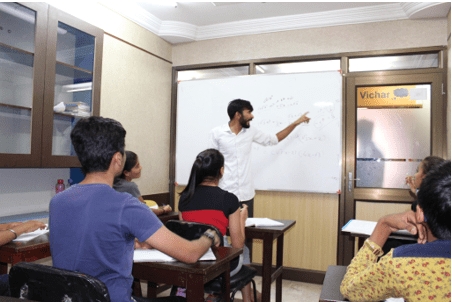
Vedic Maths vs. Abacus Franchise — Should You Offer Both?
This is one of the most frequently asked questions when people begin comparing options — and it's a valid one, since Abacus and Vedic Maths franchises are often offered by the same companies.
Both programs appeal to the same parent audience (children aged 5–14) with the shared goal of building confidence and speed in maths — though they work differently. Abacus uses mental calculation through physical bead tools and visualization techniques; Vedic Maths uses sutras and number-based shortcuts for mental arithmetic.
Because of this overlap, most successful long-standing centres in this space run both programs together. It allows a centre to pitch across a larger age range, gives parents a natural upgrade path as their child grows, and lets marketing spend work across a broader pool of potential students rather than running two separate acquisition campaigns.
When comparing Vedic Maths-only brands with those that combine Abacus and Vedic Maths, take the combined option seriously — it typically delivers better long-term student retention and revenue per centre.
Typical Investment Bands in India (2026)
Vedic Maths franchise investment in India varies considerably. It's more useful to think in bands than in individual figures:
Entry Level (₹50,000+)
Newer or smaller brands with fewer years of operation and lighter support plans. Requires careful due diligence on certification and what the fee actually covers.
Mid-Tier
Brands with 2–3 years of operations, more organized training and marketing support, and typically a combined Abacus + Vedic Maths curriculum. Most newer certified brands fall here.
Established Legacy Brands (₹2–5 Lakhs+)
Brands with 10+ years of operation, wider reach, and higher brand recall. Premium comes from established reputation, not just training quality.
There is also a separate category worth knowing about: government-backed skill training centres such as those operating under NIOS or PMKVY, which may have lower effective entry costs as they are partly funded through government schemes. These operate under different rules and revenue models and cannot be compared directly with a private Vedic Maths franchise — but if low startup cost is your primary consideration, they are worth being familiar with.

🚨 Red Flags in Franchise Pitches
- Guaranteed income promises — Educational earnings depend directly on local marketing, teaching quality, and student retention. Fixed monthly return guarantees with no discussion of effort required are a red flag
- Vague certification claims — The franchise should provide a clear and verifiable path to student certification, not a verbal promise. Ask specifically who issues the certificate and how parents can verify it
- Hidden ongoing costs — Look for mandatory annual license renewal fees not listed upfront, compulsory marketing spend, or high per-student exam charges
- No sample course content provided — Good franchisors will share sample course modules and a curriculum outline before you sign, so you can assess educational quality before committing
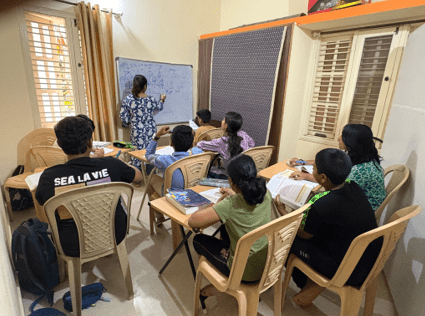
What Makes the AVAS Franchise Model Different
AVAS (Abacus & Vedic Arithmetics Study) provides a structured operational framework built for education entrepreneurs evaluating national brands:
🏛️ Skill India & NSDC Alignment
AVAS offers students NSDC-certified credentials, giving franchise partners a credibility advantage when presenting to parents and engaging with local schools.
💰 Zero Royalty Model
Franchise partners pay no ongoing royalties. Centre directors retain 100% of monthly tuition fees and purchase standard student kits as they see fit.
📚 Multi-Course Integration
Beyond Vedic Maths and Abacus, AVAS includes additional skill modules — Robotics, Phonics, Handwriting, and Rubik's Cube — so partners can expand without purchasing separate franchises.
📊 Proven Track Record
15+ years in operation, 1,000+ franchise partners in 300+ cities, and 5 lakh+ students trained — a demonstrated operational and academic support system.
💻 Digital Practice Portal
A dedicated digital practice portal for students to use between classes, increasing engagement and giving franchise partners live progress tracking.
🤝 Complete Support System
Training, marketing assistance, curriculum, and operational guidance — structured to help franchise partners get their first student batch enrolled quickly.
How to Get Started
If you are seriously evaluating a Vedic Maths franchise investment, shortlist at least two or three brands across different investment ranges. Apply the evaluation questions in this guide to each one and compare their answers against each other — not against the marketing copy. The brand that gives clearer, more specific answers to questions about certification, royalties, curriculum scope, and post-enrolment support is usually the stronger long-term choice.
Start Your AVAS Franchise Enquiry
Zero royalties, NSDC-certified curriculum, combined Abacus + Vedic Maths + multi-skill programs, and 15+ years of support across India.
Enquire About FranchiseFrequently Asked Questions
Is a Vedic Maths franchise profitable?
Yes, because fixed operational overheads remain low — especially when operated from home or an existing tuition space. Profitability depends on enrolling 20–30 active students per batch, controlling rent expenses, and maintaining high student retention through structured multi-level programs.
Do I need a formal teaching background to start a Vedic Maths franchise?
No. Comprehensive franchise models provide complete step-by-step teacher training programs covering both the mathematical shortcuts and classroom delivery methods. Passion for education, basic arithmetic aptitude, and strong communication skills are the main requirements.
Is AVAS's franchise NSDC certified?
Yes. AVAS provides Skill India and NSDC-affiliated student certifications through IIVA, giving centre directors national recognition and credibility with parents and schools.
Does AVAS charge a monthly franchise royalty?
No. AVAS operates on a zero-royalty business model. Franchise partners retain 100% of their student tuition fees and purchase physical or digital student kits per level as required.