Educational Business Ideas for Freelancers: Is a Vedic Maths or Abacus Franchise Right for You?
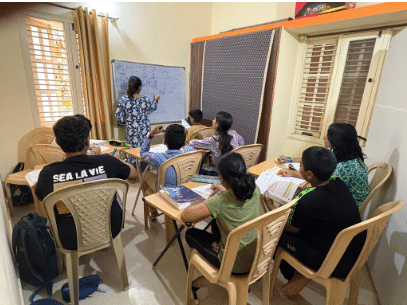
If you are already doing school tuitions from home, informal tuitions, or freelance online tuitions, you have a unique position in the education market. You don't need to start everything from scratch. You already understand parent psychology, how to manage a classroom of children, and the satisfaction of watching a student grow in confidence.
But informal freelancing has a ceiling.
If your income is entirely tied to the number of hours you spend in front of a whiteboard, you will eventually reach your revenue maximum. If you are not an established brand or official school, parents may push back when your fees increase. Many ambitious freelance tutors, therefore, look at formalizing their work through education business ideas in India — especially in specialized skill areas like Abacus and Vedic Maths.
At this turning point, most promotional material has a single message: buy a franchise now. In reality, there is a more nuanced range of options. For some educators, franchising is an excellent opportunity — but it's not right for every freelance tutor, and it's not the only path available.
This guide compares the key aspects of maintaining independence, gaining independent certification, and joining a branded network — so you can make an informed decision for your teaching career.
If You're Already Tutoring, You Have More Options Than You Think
First-time education entrepreneurs typically need hand-holding on basic classroom management and a step-by-step curriculum. As an active freelance tutor, you already have those skills. What you're most likely looking for are specific high-value assets:
If you understand you're looking for leverage rather than basic instruction, you can evaluate several side business ideas for tutors more clearly. If a franchise contract doesn't allow you to operate the way you want, or takes too much of your profit margin, you have other options — and you should know what they are before signing anything.
Three Paths for Freelance Tutors Looking to Grow
Stay Independent — Add a Certification
With this model, you remain completely independent. You enrol in a professional teacher training program to learn Abacus or Vedic Maths, gain a recognised qualification, and then teach as part of your private practice under your own business name (e.g., Sharma Academy or Bright Minds Tutoring).
Advantages:
- No constraints on pricing, batch schedules, or curriculum structure
- No monthly or annual charges, no geographical restrictions
- 100% retention of all income
Challenges:
- You must develop your own workbooks, marketing materials, and parent trust
- No national brand name to leverage
Certified + No-Royalty Brand Affiliation
This is the middle ground between independent tutoring and a conventional franchise. You affiliate with an established education organization to access instructor training, a structured curriculum, student practice portals, and brand recognition — but under a no-royalty model with a single setup or license fee rather than ongoing revenue sharing.
Advantages:
- Government-recognised or NSDC certifications for students
- Professionally produced student kits and online portals
- Marketing support without sacrificing a percentage of monthly tuition
- Brand credibility that commands higher fees
Challenges:
- You need to align with the brand's core learning levels and material standards
Traditional Franchise Model
A traditional franchise licenses the rights to use a brand name and run a specific type of centre. The franchisor typically imposes strict rules on centre layout, batch sizes, pricing, and territorial limits. In return, you pay an initial franchise fee and monthly royalties — typically 10% to 20% of gross collections.
Advantages:
- High brand recognition that reduces the effort required to attract students
- National-level competitions, TV/digital ad campaigns, and end-to-end operating blueprints
Challenges:
- Higher setup costs and ongoing revenue sharing
- Operational restrictions and possible geographical limits on your student base

Side-by-Side Comparison
| Feature | Independent + Certification | Certified / No-Royalty Brand | Traditional Franchise |
|---|---|---|---|
| Initial Investment | Very Low (₹5,000 – ₹15,000) | Low (₹30,000 – ₹50,000) | Moderate to High (₹1 Lakh – ₹5 Lakhs+) |
| Ongoing Royalty | 0% | 0% — Keep 100% of income | 10–20% of monthly revenue |
| Brand Recognition | Self-built local brand | Established national / Skill India brand | High household name recognition |
| Student Certifications | Self-issued or generic | Government-recognized / NSDC affiliated | Brand centralized |
| Operational Control | 100% total autonomy | High autonomy with standardized syllabus | Strictly regulated by franchisor |
| Growth Ceiling | Limited by personal hours | High — expand home center or add trainers | Scalable commercial centre |
Key Questions to Consider Before Deciding
1. Would you like to work independently or eventually hire other tutors?
If you plan to personally teach every child and manage a home-based practice, paying monthly royalties to a traditional franchise makes little financial sense. But if you want to grow into a full education entrepreneurship model — multiple branches, hired tutors — a franchise system provides the structure for that.
2. How much do you value established brand recognition vs. keeping your full fee?
Parents who pay premium fees look for an institution behind the program. Official certificates with a recognised brand logo carry more weight than a home-completion certificate. But if you already have local trust and just lack credentials, a no-royalty affiliation gives you official certification without compromising your monthly earnings.
3. Are you adding a skill to existing tutoring, or building a new education business?
If you work as a K-12 tuition tutor and just want to add an Abacus or Vedic Maths weekend module, independent certification with minimal overhead fits neatly. If you're leaving a corporate job to build a full-time education business, franchising speeds up the startup process significantly.
Other Education Business Ideas for Freelancers
Franchising is not the only option beyond solo tutoring. Here are two additional paths that freelance tutors sometimes take when expanding their practice without going full franchise:
Multiple Skills Under One Practice
Rather than running separate programs, some tutors get certified in two or three related areas — Abacus, Vedic Maths, Phonics, or basic robotics — and run all of them from the same space. This improves revenue per student (families enrolling children in two programs are more valuable than those in one) while avoiding the overhead of running multiple separate franchises.
Certified Online Tutoring
If you prefer not to commit to a physical business space, there are ways to certify yourself and conduct classes entirely online. This keeps costs low and removes any geographical constraint — an option that is particularly appealing for starting a home-based education business in India.
Both of these are "side business ideas for tutors" — ways to increase income and credibility without resorting to full-scale franchising.

What a No-Royalty Certification Looks Like in Practice
To illustrate what a no-royalty affiliation means concretely, here is how the AVAS model works for independent tutors:
💰 Affordability and Low Risk
Setup cost of ₹35,400 (incl. GST) covering comprehensive training, teaching program software, promotional material, and teaching kits. No commercial lease required — tutors can start immediately from home.
🏛️ Government Recognition and Credibility
Program materials and certifications are registered with NSDC Skill India — independent tutors receive corporate-level recognition when presenting to parents.
💵 100% Profit Retention
AVAS takes no royalty. Tutors set their own prices, collect their own payments, and keep 100% of their earnings — with no monthly fee deducted.
📍 Territorial Exclusivity
AVAS provides each tutor with territorial exclusivity (up to 3,000 households), eliminating intra-competitive rivalry with other AVAS tutors in the same neighbourhood.
Independent tutors get almost all the benefits of a franchise — credibility, a turnkey teaching program, and a student portal — without paying royalties.
Explore the AVAS Certification Model
NSDC-certified, zero royalties, territorial exclusivity, and everything you need to launch an Abacus + Vedic Maths teaching practice from home.
Enquire About AVASFrequently Asked Questions
Can I add Vedic Maths certification to my existing tutoring business?
Yes. Vedic Maths integrates smoothly into existing tuition setups. Because it focuses on rapid mental calculation techniques for arithmetic and algebra, it directly complements the school maths syllabus for students in Class 3 and above. You can offer it as a weekend add-on module or a specialized summer vacation course.
Do I need to franchise to teach Abacus or Vedic Maths professionally?
No, franchising is not legally required to teach these subjects. However, teaching without formal certification or structured materials makes it difficult to gain parent trust and command premium fees. Getting certified through a recognized, no-royalty network gives you institutional backing, official student completion certificates, and structured workbooks — without forcing you into a restrictive franchise contract.
What's the difference between getting certified and buying a franchise?
Getting certified means undergoing professional teacher training to master the curriculum and earn a credential to teach it. Buying a traditional franchise involves licensing a brand name, adhering to strict operational and territorial guidelines, and paying ongoing monthly royalties — often 10–20% of your total student fee collections.
Is it worth combining multiple skills under one teaching business?
Yes. Combining multiple skills — such as Abacus, Vedic Maths, Phonics, and Handwriting — significantly increases your earning potential. It raises your lifetime student value by allowing children to transition smoothly from one program to another as they grow, keeping enrolment numbers stable without requiring continuous new customer acquisition.