Best Low Investment Education Franchises in India (2026)
If you've been searching for the best low investment education franchise in India, you may have noticed that most lists bundle seemingly unrelated businesses under the same "low investment" banner. One source says a preschool franchise costs almost nothing. Another calls a coaching institute "affordable." A third lists computer education programs alongside abacus programs as if they are the same type of investment.
They're not. That's exactly why this guide exists.
"Low investment" in education franchising is not one figure — it's a range, and where a franchise falls on that range depends entirely on the type of education business it is. A skill-based after-school program and a full-scale coaching institute are both "education franchises," but the former might require ₹50,000 to get going while the latter could require ₹30 lakhs. That is not a small difference — it's the difference between starting from a spare room this month versus signing a lease, hiring staff, and securing a business loan.
This guide gives you a real breakdown of the market so you can determine where you'd like to land before putting a single rupee into it.
What "Low Investment" Actually Means in Education Franchising
The term "low investment" is used loosely in franchise listings. Education franchises typically fall into four cost brackets depending on setup costs, space requirements, and initial working capital:
Micro-Investment / Home-Based
Skill development programs — Abacus, Vedic Maths, Phonics, and select government distance learning centres. Need minimal space (an empty room or existing tuition setup) with no heavy infrastructure.
Low-Cost Centers
Specialist robotics workshops, spoken English, IT literacy, and vocational training. Needs 200–500 sq. ft. with simple furnishings or basic computer equipment.
Mid-Tier Franchises
Full-fledged computer education centres, competitive exam coaching (SSC, Bank PO), and language institutes. Requires 500–1,000+ sq. ft. and employee wages.
High Capital Franchises
Premium preschools, branded K-12 play schools, and national test preparation centres (JEE/NEET). Significant capital in land lease, interior compliance, equipment, and marketing.
The true low investment range for Indian education franchises is ₹50,000 to ₹3–5 lakhs, covering franchise fee, initial kit/curriculum materials, basic setup, and initial marketing support. Anything above ₹5 lakhs becomes "mid-investment" regardless of what the franchisor's brochure calls it.
It also helps to distinguish two concepts that are often confused: the franchise fee (what you pay the brand for the rights, curriculum, and branding) and the total setup cost (franchise fee plus space, furniture, initial marketing, and working capital to cover the first few months). A franchisor may promote a low franchise fee to attract enquiries — but the actual total cost to launch is often significantly larger when all components are included. When evaluating any low-cost franchise opportunity in India, always ask for the complete number, not just the headline.

Investment by Education Franchise Category
Most roundup articles don't explain why the numbers are so different across categories. Here is the breakdown:
Skill-Based / After-School Programs (Abacus, Vedic Maths, Phonics, Robotics)
This is consistently the lowest start-up price in education franchising — and for a structural reason. These programs don't require a traditional classroom. Many operate from a room in a residential facility, a small rented room, or even a home setup in the first year or two. There is no high-tech laboratory, no elaborate infrastructure, and no requirement for full-time employees beyond the franchise owner and perhaps one trainer.
The initial cost of materials, basic branding, and training ranges from ₹50,000 to ₹1.5 lakhs. The revenue model also contributes to accessibility: students pay monthly or term fees (not large lump sums), so the franchisee doesn't need substantial working capital while a batch is filling up.
Government-Scheme Study Centers (NIOS, PMKVY-Linked)
This is a path that many comparison articles overlook, and it's genuinely the lowest-cost route into the education business. Study centres linked to government initiatives (NIOS — National Institute of Open Schooling; PMKVY — Pradhan Mantri Kaushal Vikas Yojana) may receive government support or subsidised infrastructure, keeping out-of-pocket cost very low.
However, this is not a private franchise. You are working within a government framework, delivering government curriculum, and meeting government compliance standards. Revenue may come through scheme funding or reimbursement rather than direct tuition. It's cheap, but it's a fundamentally different type of business from running a private skill-based centre — and the two should not be confused.
Spoken English & Computer Education Franchises
A step higher — and typically carrying a significantly larger price tag than skill-based programs — are spoken English schools and computer education centres. Computer franchises require actual hardware, software licensing, internet access, and in many cases a larger physical space to accommodate workstations. Spoken English centres may not require the same hardware, but they often need more organised classroom systems and standardised testing or certification tie-ups, which increase the franchise fee.
Competitive Exam Coaching & Preschool Franchises
At the top tier of the education franchise market are exam coaching institutes and preschool franchises. Competitive exam coaching (JEE, NEET, banking, SSC) typically requires ₹10–50 lakhs or more due to the need for larger classrooms, experienced paid faculty, substantial study materials, and the marketing expenditure needed to compete in a high-stakes environment. Preschool franchises typically fall between ₹5–15+ lakhs, with requirements for dedicated play spaces, child safety infrastructure, trained early-childhood staff, and strict interiors compliance.
These can be strong businesses — but calling them "low investment" as some listings do is a significant stretch. This distinction matters if your budget is genuinely tight.
Due Diligence Checklist Before Signing Any Franchise Agreement
- Royalty and revenue model — Does the franchisor require a fixed monthly fee, a percentage of student tuition, or no royalty at all? Ensure the pricing structure allows a reasonable profit margin on your operation
- Certification and accreditation — Is the brand's student certificate or diploma accepted by parents and institutions? Confirm ISO certification or government-affiliated credentials
- Teacher training and courseware support — Low-cost franchises succeed or fail on teaching quality. Ask whether the franchisor offers initial teacher training, refresher courses, and standardised lesson plans
- Territory rights — Confirm that the contract gives you exclusive operating rights for your micro-market (2–3 km radius) and does not allow other operators from the same brand to compete in your area
- Realistic ROI expectations — Be skeptical of franchisors promising 100% ROI within 2 months. Sustainable education models typically reach operational break-even within 3–6 months
Why Skill-Based Programs (Abacus & Vedic Maths) Lead the Low-Investment Category
Skill-based programs consistently rank highest for ease of entry, capital risk, and profit margin:
🏠 Low Infrastructure Investment
Skill centres don't need high-power connections, multiple PCs, or heavy furniture — unlike coaching centres or computer institutes. A room and a whiteboard can be enough to start.
💰 Strong Profit Margins
After-school skill programs typically deliver gross profit margins greater than 60–70% of tuition revenue, after accounting for rent, any staff salaries, and materials.
🔄 Recurring Revenue
Students enrol in multi-level programs spanning 6–12 months, providing a steady monthly recurring income per student rather than one-time enrollment fees.
⏰ Work-Life Balance
Weekend and after-school operating hours allow franchise owners to run the business part-time alongside existing employment or household responsibilities.
AVAS in the Low-Investment Education Franchise Landscape
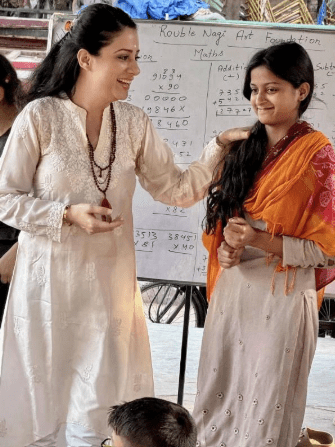
In the skill-based supplementary education sector, AVAS (Abacus & Vedic Arithmetic Study) has established itself as an accessible, high-support model for emerging education entrepreneurs:
💰 Accessible Capital Entry
AVAS franchise opportunities start from ₹1 lakh and above — accessible for home-based teachers, established tuition centre owners, and small business investors.
📚 Dual Curriculum Offering
Franchise partners deliver to a broad age band (5–15 years) under a single license — Abacus for younger children, Vedic Maths for older students.
🛠️ Turnkey Support System
Complete teacher training, student course materials, marketing templates, and continuous operational support — designed for non-technical franchise partners.
Explore the AVAS Franchise Opportunity
Zero royalties, NSDC-certified curriculum, combined Abacus + Vedic Maths programs, and full operational support — starting from ₹1 lakh.
Enquire About FranchiseFrequently Asked Questions
What is the lowest investment education franchise in India?
The lowest investment models are home-based skill programs (such as Abacus, Vedic Maths, and Phonics) and government open-schooling study centres. These can be launched with an initial outlay between ₹50,000 and ₹1 Lakh, as they require no commercial space or expensive IT equipment.
Which education franchise gives the best ROI for low investment?
After-school skill-building franchises (Abacus, Vedic Maths, STEM kits) typically deliver strong ROI because fixed operating overheads — rent, salaries, utilities — are low. Centres can reach operational break-even with as few as 15–20 active students.
Are low investment franchises less reliable than expensive ones?
Not necessarily. Investment size reflects physical infrastructure requirements (space, technology, equipment) rather than business quality. A ₹50,000 skill-based franchise requires low capital because it relies on human instruction rather than hardware, whereas a ₹15 lakh computer coaching or preschool franchise needs extensive capital for physical assets. Always evaluate track record, student materials, and franchisee reviews regardless of price point.
Can I run an education franchise from home?
Yes. Many skill-based programs — including Abacus, Vedic Maths, and Phonics — are specifically designed to be operated from residential spaces, home offices, or existing community centres. This eliminates commercial rent during the startup phase, significantly reducing early-stage financial risk.