
Abacus Classes for Preschoolers: Is It Too Early to Start?
Every parent faces this dilemma: is starting abacus classes for preschoolers too early? At the same time, many parents also wonder — if abacus learning is so beneficial, why wait? The early years of a child's life are when the brain is most receptive, and abacus is all about focus, memory, concentration, and brain development.
One of the biggest misconceptions about abacus classes for preschoolers is that age alone decides whether a child is ready. In reality, every child develops at a different pace.
Abacus for 5 to 12 Year Olds
When parents search for an abacus program for a 5 to 12 year old, they often wonder if it's the right time to begin. At this age, most children are still learning basic counting, colours, and shapes. Formal abacus training may be a little early for the very young end of this range, but simple counting games and fun number activities can help build a strong foundation.
Abacus for 5 Year Olds
For many families, age 5 is the stage where children become more ready for structured learning. Some 5 year-olds can follow instructions well and enjoy number activities, while others may benefit from waiting a little longer.
Abacus for First to Second Class Students
Many institutes recommend starting abacus for kids in Class 1 or 2 because children at this stage usually have better focus, improved number recognition, and are more comfortable following classroom activities.
Abacus Readiness Signs: How to Tell If Your Child Is Ready
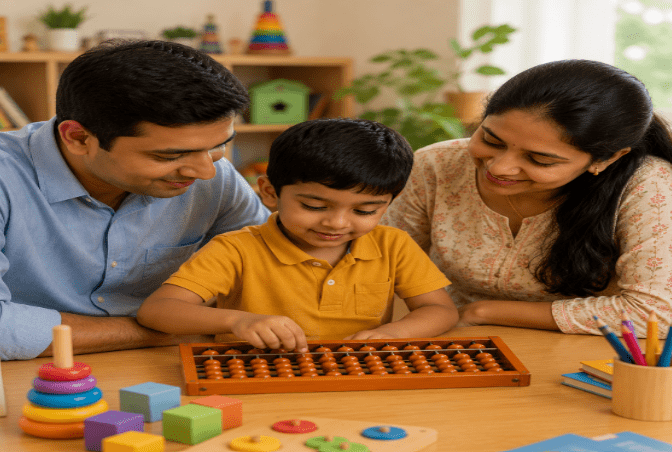
Children mature at their own rate — not necessarily in terms of age only. Here are the key signs that your child is ready for abacus lessons:
🎯 Can Concentrate for 5–10 Minutes
Concentration makes it easy for children to master abacus techniques.
🔢 Recognises Numbers 1–10
They should have basic knowledge of numbers up to 10 before starting.
📋 Can Follow Simple Instructions
For example: "Move this bead." Simple two-step instructions should be manageable.
✋ Good Fine Motor Skills
They must have smooth finger movements to effectively manipulate the abacus beads.
Pre-Abacus Activities for Toddlers: Where to Begin
If your child is not yet ready for classes, you can begin with some pre-abacus games and activities at home. This is an excellent way to prepare children for their future work with the abacus:
- Counting — Play by counting different objects together throughout the day
- Threading beads or buttons — Helps develop the fine motor skills needed for abacus work
- Number songs and rhymes — An entertaining way to learn numbers without pressure
- Puzzles — Help develop logical thinking and concentration
Want Structured Abacus Learning for Your Child?
AVAS Abacus offers age-appropriate programs designed for young learners — short, engaging sessions that make numbers fun from day one.
Explore ProgramsAdvantages of Early Abacus Learning — When Timed Correctly
When started at the right time, the advantages of early abacus learning become very apparent:
- A solid base for mental mathematics, which helps the child at school
- Enhanced concentration carried into daily tasks
- Improved coordination between the hands and brain through bead manipulation
- Increased self-confidence as children solve problems independently
Understanding Preschool Stages: One Label, Very Different Children
Every child in the "preschool" category is different, so age cannot be the only criterion for beginning classes.
Building Basics
Most children are still learning basic numeracy. Fun activities involving basic counting are most appropriate at this stage.
Getting Ready
Children who can count, concentrate for short periods, and understand basic instructions are often ready to begin structured abacus learning.
Ideal Starting Point
Most children have improved concentration and numeracy skills. This is why most schools consider this the appropriate age for starting abacus.
If Your Child Isn't Ready, Here's What Actually Helps
Many parents think they have to wait until their child is old enough for abacus classes — but that's not true. Instead, spend a few months on simple pre-abacus activities that build the skills needed for future learning.
Try counting everyday objects like spoons, toys, or fruits. Sort blocks by colour or size, let your child thread large beads, sing number rhymes, or solve simple puzzles. These fun preschool math activities improve counting, fine motor skills, and logical thinking.
Just 10 minutes a day is enough to build confidence and make numbers a natural part of your child's routine.
When They Are Ready
If your child shows all the required signs of readiness and is from either LKG or UKG, then it is the right time to sign them up for abacus classes. Select programs that are appropriate for young kids and offer short sessions with hands-on activities.
The benefits of abacus education are felt most clearly when a child starts at the right age — improved concentration, stronger mathematical skills, better coordination, and growing confidence. However, starting too early can make things unnecessarily difficult.
The Short Answer: It Depends on the Stage, Not the Label
Preschool in India covers a wide spectrum — from playgroup/nursery (ages around 2.5–3.5) up to LKG–UKG (ages around 4–6). These are two very different children, so the answers will be different.
Most recommendations for starting formal abacus training point to ages 5–6. That's the older half of the preschool years — not all of them — and the period considered the proper age to begin abacus learning.
Key Readiness Indicators
Number Recognition
This is not just about age — it's about comfort with numbers. Whenever a child can easily identify numbers from 1 through 9 without difficulty or hesitation, that is a clear indicator they are ready for the next level of learning. Many parents focus on age as the main factor, but number recognition is actually the first indicator that makes everything else easy.
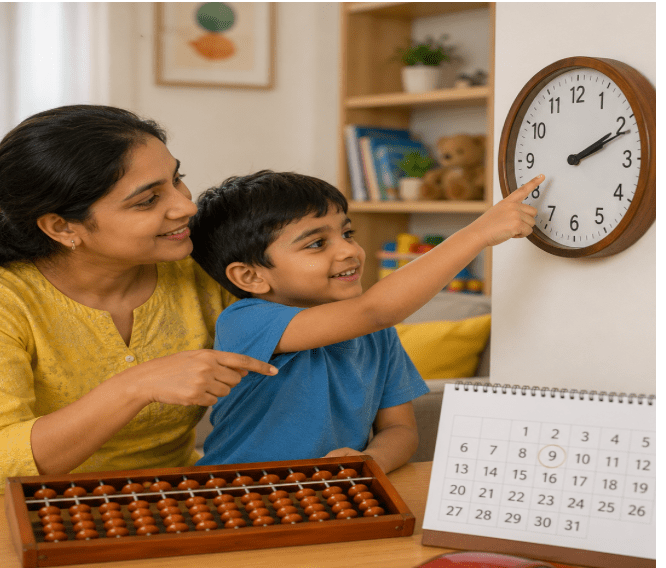
Try this at home: Ask your child to identify numbers seen on a clock, calendar, or number plates. If they can recognize numbers easily, they're showing strong readiness signs.
Parenting tip: Do not pressure your child to memorize numbers. Always give them fun learning through games and number playing cards — enjoyment is the best teacher.
Attention Span
The child doesn't need to sit for a prolonged period of time; however, they need to concentrate on a short task for 3–4 minutes. The development of an attention span is one of the key indicators that the child is ready to start using the abacus.
Activity: Provide your child with a simple puzzle or drawing task. If they concentrate on it for 5–7 minutes, that's a good indicator of readiness.
Enjoying Counting
If your child finds pleasure in counting common things around them — toys, fruits, or even steps — it means they feel comfortable with numbers. This is an important indicator that they are ready to start learning.
Counting should not be perceived as a lesson. Encourage it during daily activities: count blocks in the playroom, fruits at snack time, or steps on a walk. Comfortable counting usually indicates a better natural understanding of abacus concepts and allows children to actively participate in classes.
Age-by-Age: What's Realistic at Each Preschool Stage
Playgroup / Nursery (2.5–3.5 Years)
Most children at this stage are still developing their attention span, fine motor skills, and basic number recognition. Instead of formal abacus classes, focus on simple counting games and fun number activities that build a strong foundation for future learning.
Best activities: Counting toys and everyday objects, number songs and rhymes, sorting blocks by colour or size. Counting fingers, number songs, arranging brightly coloured blocks, and solving number puzzles are all simple activities that support early numeracy skills without any extra stress.
LKG / First Class (5–6 Years)
Children of this age will normally have sufficient attention and number recognition to begin learning abacus through structured classes. They can attend class for a slightly longer duration and are ready to build a base for mental math while improving confidence.
UKG / Second Class (6–7 Years)
At this age, many children are ready for abacus learning. They have a good level of concentration, number recognition ability, and can understand simple instructions. Short, interactive lessons that teach counting using an abacus through engaging activities work very well at this stage.
Why Starting Early — When Ready — Has Real Advantages
When a child shows genuine abacus readiness signs, starting young actually works with their brain chemistry. Between ages 5 and 7, a child's brain goes through an incredible period of growth:
- Better spatial memory — Through constant practice, the mind is trained to visualize bead movements, enabling children to memorize numbers with ease
- Whole brain engagement — Learning the abacus involves both hand movement and mental calculation simultaneously, engaging both brain hemispheres
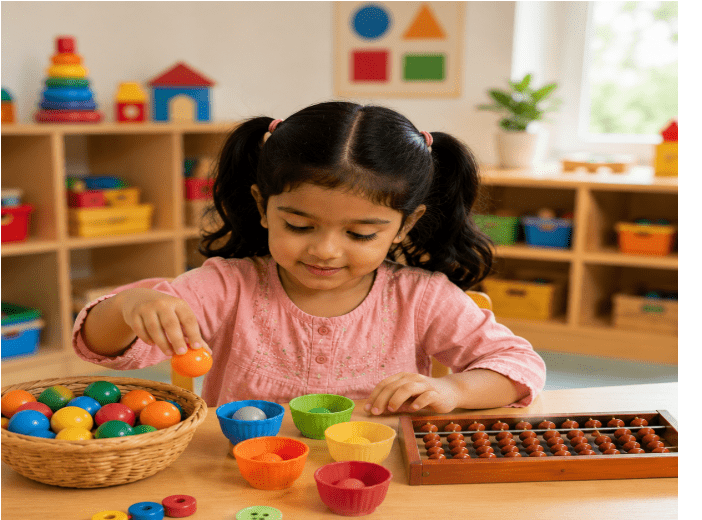
Early Because Ready vs. Early Just Because
There is only one thing that matters if you want your child to derive real benefit from early abacus learning — timing.
❌ Early Just Because
Registering a reluctant 3-year-old simply because the neighbor's child is doing it. This usually results in tears, stress, and the early conclusion that "math is hard."
✅ Early Because Ready
Waiting for your 4 or 5-year-old to recognize numbers 1–9, concentrate for 10 minutes, and enjoy visual activities. An abacus program then becomes a fun game that builds enormous self-confidence.
The Real Risk of Starting Too Early
Every parent wants to give their child the best beginning in life — that's understandable. But in abacus education, being unprepared can actually make the whole learning process harder.
⚠️ Risks of Starting Too Early
Frustration and Loss of Motivation: Children who start before they're ready may struggle with basic instructions, cannot concentrate on activities, and become disinterested after some time. This doesn't mean they can't learn — it just means they need a little more preparation before moving forward.
Negative First Impression of Math: Early experiences shape how children perceive math for years to come. When children start class without being ready, they perceive mathematics as challenging rather than enjoyable — making it harder to build a positive relationship with the subject later.
Sometimes Waiting Is More Efficient: A few extra months of everyday games and number activities can help a child develop concentration, number recognition, and listening skills naturally. When they are ready, they comprehend everything faster and actively enjoy learning from the very first session.
What to Consider When Selecting a Preschool-Friendly Abacus Class
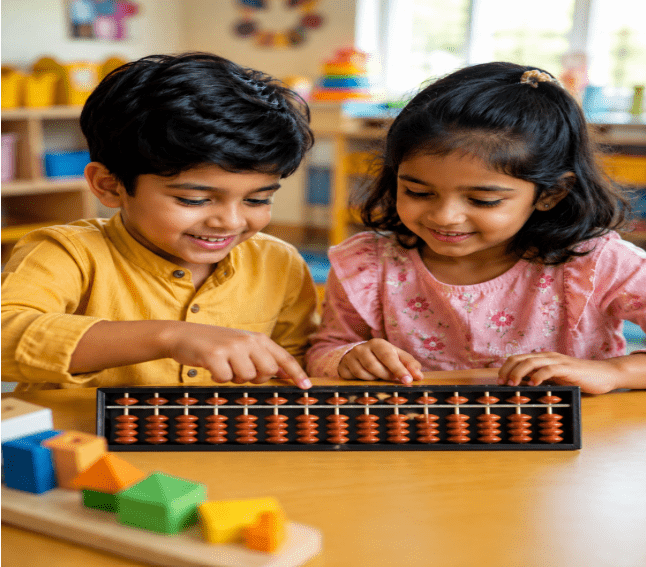
Selecting the right class is as important as selecting the right time to start. Here is what to look for:
- Short classes — Young children benefit most from short, focused sessions rather than long lessons
- Activity-based learning — Games, stories, songs, and varied activities make lessons interesting rather than repetitive
- Experienced preschool trainers — Trainers who work with young children know how to explain concepts in a patient and encouraging way
- Supportive environment — When children feel comfortable and relaxed, they learn better and retain more
Start Your Child's Abacus Journey the Right Way
AVAS Abacus offers age-appropriate, activity-based programs with certified trainers who specialize in working with young learners. Find a center near you or book a free trial class today.
Find an AVAS Center Near YouFrequently Asked Questions
What is the youngest age a child can start abacus classes?
Children can begin abacus lessons from ages 5 to 12. The ideal age is determined by your child's readiness — not age alone. This involves basic counting ability and the ability to follow simple instructions. Beginning at an appropriate pace ensures learning is fun.
Can a 3-year-old learn abacus?
Yes, 3-year-old children can begin learning abacus in an easy and fun way — not through long or formal classes, but through counting games, colourful bead activities, number songs, and little games. Once they develop the basic skills, they will be able to join structured abacus classes very easily.
What if my preschooler loses interest quickly?
Lapses in concentration among young children are normal. Rather than pushing the child, keep sessions shorter and incorporate games and colourful beads to make math exciting. Take breaks when needed and motivate your child with compliments. This way, learning becomes a positive experience.
Is it better to wait until primary school to start?
Not necessarily. Several children begin abacus learning between ages 3 and 5. Your child only needs number recognition skills and the ability to follow simple instructions to start abacus learning effectively.
What can I do at home before enrolling my preschooler?
Count daily objects together, play number games, recite number songs, and use colourful toys or blocks for counting activities. These simple, fun activities naturally build the skills needed for abacus readiness.