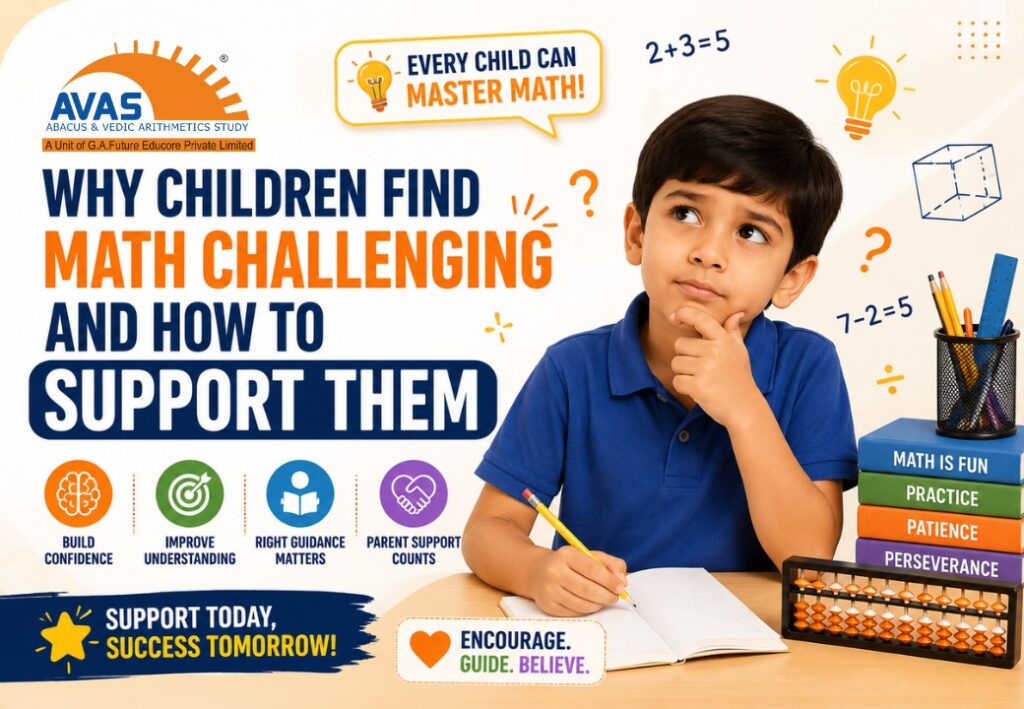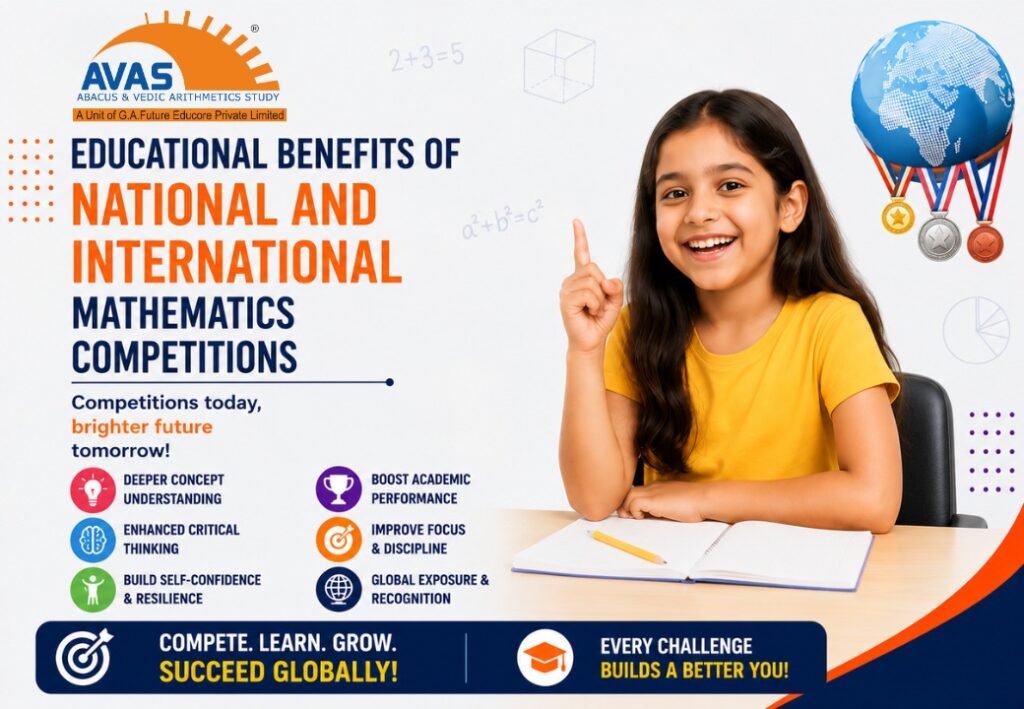


International competitions and global math Olympiads are not for genius kids anymore. Students of all kinds are attending today and doing well in educational programs when they are helped with the correct preparation strategy.
You may also be asking how you can get kids ready to compete at mathematical Olympiads around the world without pressuring them, burning them out, or teaching them by rote, the answer is in having good foundations, problem-solving techniques in competition, and confidence with time.
Global competitions emphasize thinking capacity, logical thinking, speed, and flexibility as opposed to school exams, which tend to test memory. Through regular preparation and early acquisition of skills, children are able to partake in the learning process and attain excellent performance.
Global Math Olympiads? What Are They?
Global math Olympiads are competitions at the global level aimed at examining the conceptual knowledge and the ability to analyze and solve problems within a limited time of a child.
Distinction Between the National and International Competitions
Syllabus-based questions can be given special attention in school and national-level exams. The Olympiads, however, are not confined to textbooks all around the globe. They focus on:
Logical reasoning.
Pattern recognition.
Multi-step problem solving.
Innovative use of ideas.
Global Platforms Are Exemplified
There are several international Olympiads and math competitions that can be used to invite students across the world to participate and enhance academic excellence and cross-cultural learning.
Expectations of Skills at International Levels
Students are supposed to reason and think on their own, time management, and application of concepts in new situations, and so, preparation based on skills is required.
At What Age Should Children Begin Preparing?

Early Exposure vs Early Pressure
Early math thinking does not imply that children will be placed in heavy competition. The early years should be inquisitive, fun, and confident.
Age-Wise Preparedness Measures
6–8 years old: Number sense, puzzles, and mental math games
9–11 years old: Logical thinking, multiple-step problems
12 years old and above: Olympiad-like challenges and practice time
Building Curiosity First
Children and competition go hand in hand when they like doing math.
Essential Competencies Required in International Math Competitions

Strong Number Sense
Olympiad success is based on a sound knowledge of numbers.
Mental calculation fluency
Estimation skills
Identifying patterns of numbers
These are skills that make people less dependent on calculators and make it faster.
Rational and Critical Thinking
The questions on the Olympiad usually involve:
Decomposing complicated issues
Relating various ideas
Using logic rather than formulae
This is where the problem-solving abilities in the form of competition skills come in.
Speed with Accuracy
Quick responses are not bad—but not when they are incorrect.
Regular timed practice
Error analysis
Smart shortcut methods
Training creates equilibrium, which eliminates haphazard errors.
Focus & Emotional Control
International contests may be stiff.
Staying calm under pressure
Managing exam nerves
Establishing concentration practices
Being mentally disciplined is also as essential as being knowledgeable in math.
Designing an Intelligent Preparation Plan

Building on the Basics, Revolving on the Competitors
Children must learn to:
Master core concepts
Enhance mathematical foundations
Know why solutions are behind solutions
Well-developed fundamentals will result in easy, superior problem-solving.
Everyday Practice, Burnout-Free
Stability is better than prolonged academic time.
Ideal routine (20–30 minutes daily):
Mental math training
Fun puzzles
Logic challenges
Concept reinforcement
This makes learning interesting and efficient.
Contribution of Abacus and Mental Math in Olympiad Success
The Olympiad preparation using abacus in conjunction with systematic mental math training is one of the strongest tools used in the preparation of the modern Olympics.
Key Benefits Include:
Faster calculations
Good pictorialization ability
Improved memory
Enhanced focus
Greater ability in big numbers
Abigail (2002) found that children who were trained in abacus methods usually perform better than their peers in speed-related events and commit a small number of errors.
Significance of Practicing Tests and Exam Proxies
Mimic exams will replicate the conditions of the actual competition and will train the children to:
Apprehend questions patterns
Improve time management
Reduce exam anxiety
Track progress
Practice creates comfort and the feeling of confidence way before the actual day of competition.
The Support Without Pressure of Parents
The attitude of the parents influences the competition of a child.
Healthy Support Includes:
Promoting hard work, not only outcomes
It is better not to compare oneself with other children
Praising minor achievements
Having a favorable learning climate
Making math not a fear-inducing activity among children helps them to perceive competitions as a chance—not a threat.
Common Mistakes to Avoid
Some of the ways families, without realizing it, cause stress are:
Burying children with assortments of guidebooks
Beginning the preparation late
Focusing only on speed
Disregarding emotional preparation
Making learning continuous testing
It is never good to study intensely but in a balanced manner.
Getting Ready to Global Exposure Beyond Exams
Math does not teach children as much as global competitions.
They Learn To:
Manage problematic circumstances
Accept failure as growth
Get used to different levels of difficulty
Develop global scholar trust
These are life skills that are not just limited to classrooms.
Making Olympiad Preparation Lifelong Competencies
When properly done, Olympiad preparation produces:
Excellent academic achievement
Sharp analytical thinking
Growth mindset
Love for learning
Dependence on problem-solving
It is not a short-term objective but a long-term benefit.
Final Thoughts
Knowing how to train children to compete in math world championships is knowing how to develop abilities, not coercion.
Through early foundation training, explanation of mental math, strategic practice and positive reinforcement, children would like mathematics and excel on international levels.
Competitions around the world are not stress trials; they are a journey of building confidence that prepares people to think in the future.