
Top Benefits of Abacus Classes for Kids: What Parents Should Know
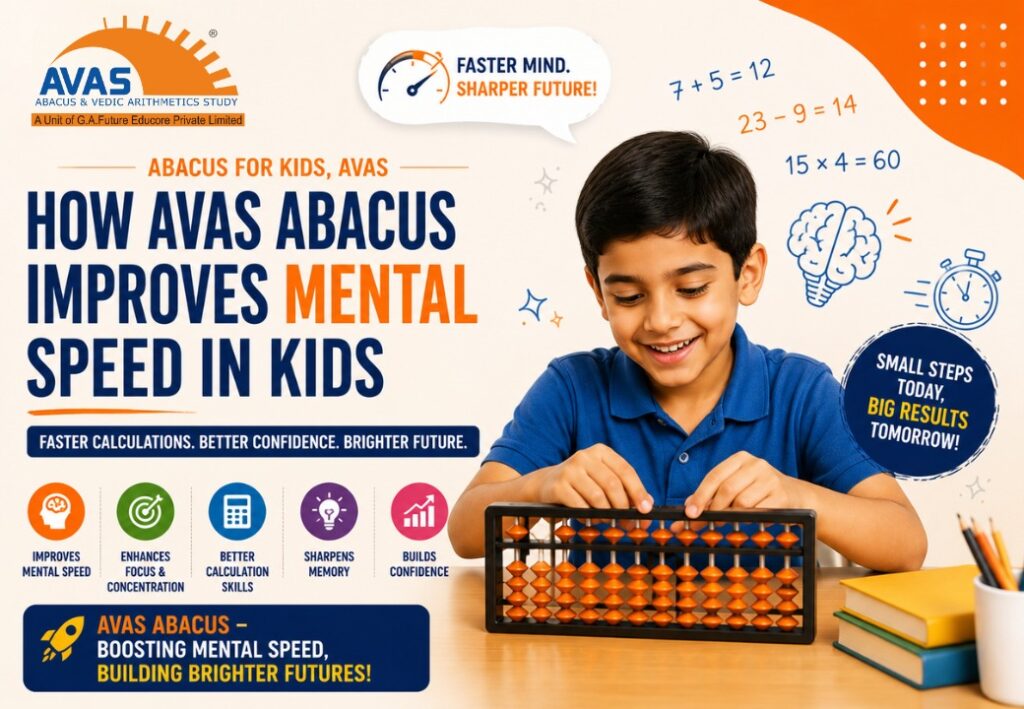
When choosing an after-school activity, most parents look for something that supports both learning and overall development. Abacus classes have become a popular choice because they offer much more than faster calculations. The benefits of abacus classes for kids include improving concentration, logical thinking, memory, and confidence — while making maths genuinely enjoyable.
Instead of simply teaching children how to calculate, abacus helps them develop skills that support learning both in school and in everyday life. Children today face many distractions that make it hard to remain focused for extended periods. Regular abacus use helps them cultivate discipline, active thinking, and visualization skills — building up concentration, memory, and confidence with numbers gradually over time.
Abacus and Brain Development: More Than Mental Maths
The most significant aspect of abacus and brain development is the positive connection between the two. Using the abacus involves visualizing beads, listening attentively, using the hands, and calculating — all at the same time. These processes make children use more than one type of thinking, rather than simply relying on memorization.
You may have heard the term "whole brain development abacus" while looking through various programs. This typically describes activities that involve both analytical thinking and visual imagination. While abacus is not a magical instrument that instantly develops extraordinary skills, regular practice does contribute to improved attention, working memory, mental maths, and problem-solving. The degree of improvement varies from child to child depending on age and consistency of practice.
Does Abacus Help School Performance?
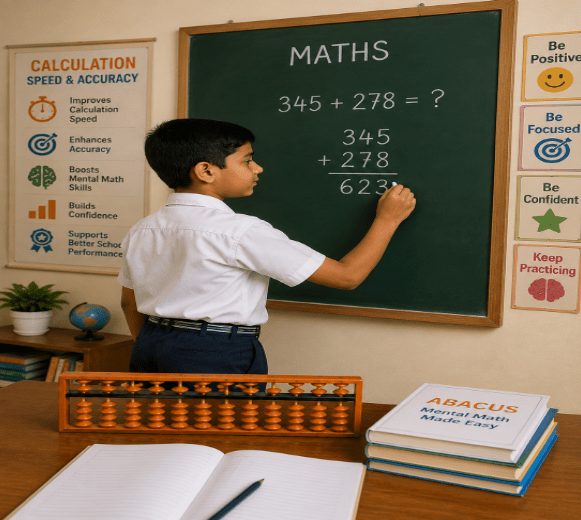
The most frequent question parents have is whether abacus helps school performance. The honest answer is that abacus will not produce immediate results like higher grades overnight. But children do develop the skills that underpin successful learning.
Many of the abacus benefits for children extend well beyond mathematics. As children develop the ability to visualize numbers and solve problems using mental maths, they also get better at paying attention, memorizing information, and solving multi-step problems — skills that help across all subjects.
Another important reason why abacus is good for kids is that it develops consistent learning habits. Children learn patience, independent practice, and how to work through problems systematically. This helps them participate more actively in class and approach maths with greater confidence.
Abacus cannot promise higher grades, but it builds the foundation that makes better learning possible — focus, confidence, and a strong sense of numbers.
Why So Many Parents Are Turning to Abacus Training
Today's world is full of distractions, and parents are increasingly concerned about children's shortening attention spans. This is why many families are seeking education options that develop the whole child — not just academic performance.
One of the reasons so many families choose abacus training is because they can see it developing a wide range of skills: attention, logic, memory, and self-confidence through regular practice. These abacus benefits help children develop proper learning habits and become more confident in their own abilities as they learn to visualize numbers and solve problems independently.
See the AVAS Abacus Difference
Structured, age-appropriate programs with certified trainers — designed to build real skills, not just faster calculations.
Explore AVAS ProgramsThe Core Cognitive Benefits
Abacus practice provides children with core cognitive skills that prove helpful both in school and in daily life. These include improved concentration, memory, logical reasoning, and mental calculations — gained through analysing problems, visualising numbers, and solving them step by step rather than just memorising answers.
Calculation Speed and Accuracy
With time and regular practice, children become comfortable dealing with numbers and can solve mathematical problems without calculators or counting fingers. Mental maths benefits include improved number sense and higher confidence in calculations.
Working Memory
Children who regularly train with the abacus learn to keep numbers in their heads, calculate, and memorize results simultaneously. These mental exercises strengthen working memory — helping children follow instructions in class and complete multi-step tasks.
Visuospatial Processing — The Mental Abacus Effect
As children train, they learn to visualize the abacus in their minds. This "mental abacus effect" is why researchers have explored the link between abacus training and brain development. Children learn to combine visual and logical thinking during problem-solving.
Concentration and Focus
Abacus exercises require patience, concentration, and accuracy — helping children focus on one task at a time. Many parents notice improvements in classroom behaviour and homework performance after abacus training begins.

Beyond Maths: The Less-Obvious Benefits
Although faster calculation is one of the first things that come to mind with abacus, many of the long-term benefits have nothing to do with maths at all. As children become better problem solvers, they also learn how to listen, stay disciplined, and remain calm — skills that make a difference both in school and outside it.
Confidence & Math Self-Efficacy
Children gain confidence gradually as they solve calculations step by step and succeed. This belief in their own ability often leads to higher class participation and more confident homework completion.
Listening Skills
Abacus helps children pay attention to instructions, concentrate on demonstrations, and complete each step in order. This careful listening carries directly into classroom learning.
Working Under Pressure
As children progress, time-limited practices and competitions teach them to perform quickly and accurately under pressure — a skill that helps enormously during school tests and exams.
What the Research Actually Shows
It's important to know what science actually says about abacus education. Scientific studies on abacus and brain development confirm that abacus training helps build visualization and visuospatial processing, working memory, attention, and calculation skills. As children visualize the abacus and perform mental calculations, they develop cognitive skills beneficial not just in maths but in general learning.
Research also shows that abacus learning may contribute to better development of non-symbolic number sense — the ability to estimate and work with quantities without being entirely dependent on symbols. This stronger number sense helps children reason more effectively when solving mathematical problems.
Abacus is not a shortcut to immediate success. The benefits come incrementally through hard work and effective teaching — but they are real, consistent, and long-lasting.
When Do These Benefits Typically Show Up?
Results from abacus classes don't appear overnight. Progress takes time — generally between 9 months to one year of consistent practice. Each child is unique, and progress is influenced by age, consistency, and practice both inside and outside class.
Getting Familiar
Children familiarize themselves with the abacus, learn to move their fingers more smoothly, and handle beads with increasing ease.
Building Skills
Improved concentration, the ability to do mental calculations more quickly, and a stronger understanding of numbers begin to emerge.
Lasting Development
Improved problem-solving skills, stronger working memory, and increased confidence when handling maths assignments become clearly visible.
How Parents Can Reinforce This at Home
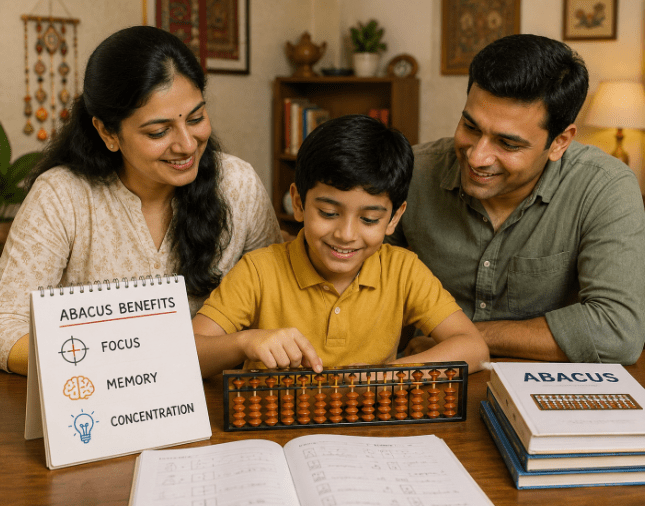
Abacus lessons provide great learning, but the development process doesn't need to be limited to class time alone. There are simple steps parents can take at home to reinforce the skills learned during lessons — the goal being to create a positive atmosphere for practice, not to extend studying pressure.
Simple Ways to Support Your Child at Home
- Daily practice of 10–15 minutes — Consistent short sessions are far more effective than sporadic longer ones for building concentration, memory, and mental calculation
- Never demand perfect results — Praise effort and progress rather than correct answers. This encourages a growth mindset
- Use mental maths in everyday life — Ask your child to add items at the shop, count objects at home, or solve quick mental problems on the way to school
- Show genuine interest in their classes — Supporting children during lessons and celebrating minor achievements plays a significant role in sustaining motivation
Choosing a Program That Actually Delivers These Benefits
Not all abacus training programs provide the same learning experience, so selecting the right one is as important as deciding to enrol your child. Look for a program that has qualified trainers, a well-planned level-based curriculum, regular assessments, and age-appropriate teaching methods.
Good abacus classes include frequent feedback and motivate children to build confidence gradually — not rush through levels. Programs with NSDC certification alignment, like AVAS Abacus, and teachers certified through IIVA ensure that children are taught with proper pedagogical methods, not just subject knowledge.
Frequently Asked Questions
Does abacus really improve school maths performance?
Yes, abacus education can assist with school maths by helping children visualize numbers and build a strong number sense. Improved working memory, attention, and visuospatial skills — all developed through abacus training — are directly relevant to maths performance. However, outcomes depend on consistent practice and quality instruction. Abacus is not a substitute for school tuition, but it complements it strongly.
How long before I see results from abacus classes?
All children learn at their own pace. Within the first few weeks, children typically get comfortable with the abacus and classroom activities. Improvement in concentration, mental maths, and confidence is normally seen after 4–6 months of consistent training. Problem-solving, working memory, and mental maths skills tend to develop more fully within 6–12 months. Consistency and quality instruction are the key factors.
Should my child learn abacus, Vedic maths, or both?
It depends on your child's age and current stage of development. The recommended age for abacus classes is 5–12 years. For younger children, abacus is ideal as it builds number sense through visual, hands-on learning. For older children (age 9+) who already know basic mathematics, Vedic maths provides powerful shortcut techniques. A combined program offers the most complete benefit.
Is whole-brain development from abacus scientifically proven?
Scientific studies do show that abacus training improves abilities like working memory, attention, visual-spatial skills, and mental calculation. These qualities develop over time through consistent training — they are not immediate or guaranteed results. The term "whole brain development" refers to the fact that abacus engages both analytical and visual-spatial areas of the brain simultaneously.
Give Your Child the AVAS Abacus Advantage
Structured programs, certified trainers, and a government-recognized curriculum — designed to build real, lasting cognitive skills from the ground up.
Find an AVAS Center Near You