Best Calculation Improvement Programs for Kids in India (2026)
When you've begun to look into ways to help your child compute faster, you've likely noticed something strange — every institute you find is sure that it's the only one worth considering. The abacus centre tells you abacus is the answer. The Vedic maths academy insists Vedic maths is the solution. No one actually walks you through the options.
That's what this guide aims to fill. We aren't here to push any particular approach — we're here to help you determine which one, or combination, fits your child best.
What "Calculation Improvement Programs" Actually Means
One of the most important misconceptions when searching online is that people assume all methodologies are the same. Before comparing them, it's important to recognize there are actually two very different types of programs:
Competitive Exam Speed-Math for Adults
- Designed for Bank PO, SSC CGL, UPSC, CAT candidates
- Short crash courses using shortcut tricks
- Assumes existing knowledge of algebra and arithmetic
- Focused on MCQ exam speed and accuracy
Foundational Programs for Kids (Ages 4–15)
- Re-program how young minds think about numbers
- Build working memory and spatial reasoning
- Create lifelong numerical confidence
- Multi-sensory brain development approach
For school pupils, improving calculation isn't just about memorizing shortcuts for next week's test — it's about cognitive development.
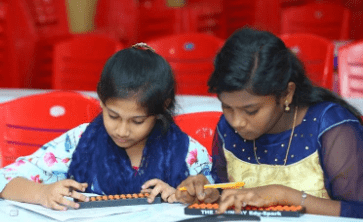
Comparing the Main Approaches
Each calculation method works differently. Understanding these differences will help you decide which approach is right for your child's age, personality, and current mathematical comfort.
Abacus Training — Visual & Brain-Based Learning
Abacus is one of the most popular mental arithmetic training programs in India. It is based on a physical tool — the abacus — which children gradually learn to use mentally.
Best for:
- Kids aged 5–12
- Beginners in maths
- Children who learn visually
Key Benefits:
- Improves concentration and memory
- Develops strong basic calculation skills quickly
- Educates both hemispheres of the brain
- Increases non-calculator mental calculation ability
Limitations:
- Requires a learning period to internalize
- Benefits depend on consistent daily practice
Vedic Maths — Shortcut & Technique-Based Learning
Vedic maths is based on ancient Indian sutras — quick calculation techniques and formulas. Very popular in schools and competitive test preparation.
Best for:
- Kids aged 9+
- Students already familiar with the fundamentals
- School-going children preparing for exams
Key Benefits:
- Quick solutions to problems in exams
- Simple tricks for multiplication, division, and algebra
- Builds confidence in school maths skills
- Academically applicable without modifications
Limitations:
- Not recommended for very young beginners
- Requires existing knowledge of basic concepts
Combined Programs — The Smart Approach
Some of the best math skill programs for kids in India offer a mix of approaches rather than requiring parents to choose just one.
These programs typically consist of:
- Abacus for base skills and visualization
- Vedic maths for advanced techniques and shortcuts
- Structured mental maths practice for speed
Children have different learning styles at different stages of development. A combined approach allows them to begin with visualization (abacus), build shortcuts (Vedic maths), and get faster through practice. This is usually the best long-term plan.
AVAS Offers Both Abacus and Vedic Maths — Together
One structured, government-recognized program that takes your child from bead visualization at age 5 to advanced Vedic maths techniques by age 9+.
Explore AVAS ProgramsHow to Choose the Right Program for Your Child
1. Age and Current Number Comfort
Ages 5–9 (Lower Primary): Children at this stage need things they can see and hold. They are still developing abstract numerical reasoning. Abacus is a tool that makes numbers tangible and real.
Ages 9 and Up (Upper Primary / Middle School): Students familiar with basic place value and multiplication tables are ready for Vedic maths tricks that make long division, multi-digit products, squares, and fractions significantly easier.
2. Learning Style: Visual vs. Technique-Based
The Visual / Hands-On Learner: If your child likes to build with blocks, draw, or enjoys physical interaction, abacus mental arithmetic is an ideal fit for how their brain processes information.
The Pattern-Seeking / Analytical Learner: If your child enjoys word puzzles, riddles, and logical hacks, Vedic maths will give them a cognitive boost by turning multi-step arithmetic into beautiful patterns.
3. Time Commitment and Course Duration
- Abacus: Requires short, frequent practice (10–15 minutes a day) across several levels to develop mental image retention
- Vedic Maths: Modular learning — a student can learn some basic sutras in a few months and see measurable improvement in school test completion times
4. Certification and Quality Standards
Ensure the program has a consistent, grade-level curriculum. Look for certified trainers from established educational institutes with NSDC Skill India alignment or NCERT content partnership — not local tutors with printed worksheets.
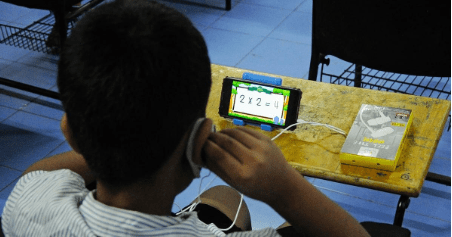
Essential Evaluation Checklist
Before selecting any Abacus or Vedic Maths program in India, run through these quality checks:
Quality Evaluation Checklist (Prior to Enrolment)
- Structured, level-based curriculum — Not random worksheets or unplanned teaching
- Validated trainers with appropriate teacher assessment — Not just subject knowledge but proven teaching skills
- Maximum 10–12 students per trainer — Small batch sizes ensure personal attention
- Free, hands-on trial class available — Try before enrolling
- Objective progress tracking and regular tests — Clear, measurable improvement, not just marketing claims
- Two learning paths available — Both online classes and local centre support
What the Research Actually Says
Parents often ask whether calculation improvement training leads to real cognitive improvement or is merely a set of "party tricks." Mental calculation studies using cognitive neuroscience tools reveal genuine changes in how children process numbers and solve problems following structured training.
Working Memory Expansion
Brain imaging findings show greater activation in parietal and frontal regions involved in visual mental calculation and working memory capacity.
Better Calculation Speed
Children's processing speed and accuracy improve naturally as they learn to process operations without fingers or slow paper steps.
Reduced Math Anxiety
Once simple calculations become easy, children gain the confidence to tackle complex word problems and concepts without stress.
Cognitive benefits take time to develop — it's like brain exercise. Regular, consistent practice is what builds lasting mental agility, increased working memory, and long-term confidence.
🚨 Red Flags When Choosing a Program
Guaranteed results with no curriculum to back it up. Calculation programs improve speed, accuracy, and confidence — but they don't cover geometry, word problem comprehension, or statistics. Avoid institutes making unrealistic promises about school performance.
No trial class offered. Any reputable skill-building school provides a free live demonstration or diagnostic class before requesting any long-term commitment.
Uncertified trainer. If teachers are not certified in the program's pedagogy and child psychology, the class becomes a supervised homework session — not structured skill development.
Fixed learning method with no flexibility. Beware of providers who insist abacus is useless or Vedic maths is the only valid technique. Each method has a target age and stage of cognitive development.
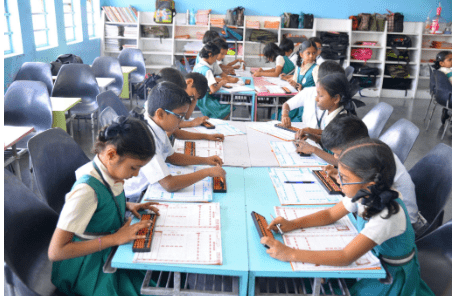
Why AVAS Teaches Abacus and Vedic Maths Together
Most programs force parents to choose: start with abacus now, or wait for Vedic maths later. AVAS (Abacus & Vedic Arithmetics Study) resolves this by offering a single, recognised curriculum that combines both methods under one structured platform.
Foundational Phase (Ages 5–9) — Abacus
- Develops visual bead imagery and spatial memory
- Builds strong mental visualization ability
- Enables fast single and double-digit calculations
- Improves focus, memory, and number sense
Advanced Phase (Ages 9–15) — Vedic Maths Sutras
- Practice complex multi-digit mental calculations
- Powerful shortcut techniques (sutras) for speed
- Direct application in school syllabus, Olympiads, and entrance exams
- Enhances speed, accuracy, and problem-solving skills
Government-Recognized Excellence
AVAS is an NSDC Skill India Approved Training Partner and NCERT Content Partner. AVAS programs follow the vision of India's National Education Policy (NEP 2020) for foundational literacy and numeracy — not unverified private frameworks. Trainers are formally certified through IIVA (Indian Institute of Abacus & Vedic Maths).
Years of structured skill development since 2010
Learners benefitted across India
Cities with learning hubs and partners
Frequently Asked Questions
What's the difference between abacus and Vedic maths training?
Abacus is ideal for younger children (ages 5–10) and develops visual-spatial number sense using a physical bead tool. Vedic Maths uses mental sutras and shortcut techniques to calculate multi-digit numbers, suitable for children from age 9 onwards.
Which calculation method is best for my child?
It depends on your child's age and learning style. For ages 5–8, abacus training is usually best — it turns abstract numbers into physical, moveable beads. For middle school children (ages 9+) who already know basic multiplication tables, Vedic maths offers faster exam calculation shortcuts.
At what age should a calculation improvement program start?
Children can start foundational calculation programs as early as ages 5–6 with beginner abacus courses, provided they can recognize basic digits from 0–9. Vedic maths is typically introduced around ages 9–10 (Class 4 or 5 onwards).
Can my child learn both abacus and Vedic maths together?
Yes, and doing so offers significant advantages. Learning abacus early establishes spatial visualization skills, while Vedic maths later provides algebraic pattern shortcuts. Integrated programs like AVAS allow children to transition smoothly from abacus to Vedic maths as they grow.
Do these programs actually help with school exam performance?
Yes. While calculation improvement programs are not traditional school tuitions, they increase speed and accuracy — allowing children to complete exam papers faster, reduce costly calculation mistakes, eliminate math anxiety, and leave time to double-check answers.
Find the Right Calculation Program for Your Child
AVAS offers a government-recognized, integrated abacus and Vedic maths program — delivered by certified trainers in 300+ cities across India and live online. Book a free trial class today.
Book a Free Trial Class