
What are Abacus Classes?
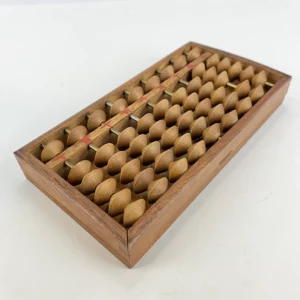
Abacus learning is not traditional math learning where people just memorize procedures and do written calculations.What is different about abacus learning is that people do not learn traditional ways as they are taught to do math with written numbers, but they learn with an internal visual model. Children visualize the position of beads in their heads to add, subtract, multiply and divide—sometimes at rapid pace. The abacus training is so powerful because it is a transition from symbol thinking to image thinking.
Key distinction: Traditional math trains the left brain — logic, sequences, and rules. Abacus training engages both hemispheres simultaneously through visualization, movement, and counting, activating whole-brain development.
Why Early Brain Development Matters
The childhood years (ages 4 to 14) are a time for brain development. In these years, the brain is developing neural pathways at an astounding rate and the nature of the stimuli to which a child is exposed in this early period directly affects the quality and strength of these neural pathways.
The innovative educator, Maria Montessori, whose child-centered teaching approach is now used in schools around the world, valued the importance of experiences that are hands-on and stimulating for children’s brains, rather than passive instruction. Abacus learning is very similar: tactile, visual, rhythmic and active. All sessions require the brain to focus, imagine, and synchronize at the same time.
Early investments in challenging and stimulating programs lay the foundation of cognitive abilities that impact children in all areas of their lives, well-beyond the classroom walls.
10 Benefits of Abacus Classes for Child Growth
# | Benefit | What It Means for Your Child |
01 | Improves Focus | Each abacus session demands sustained attention, training children to concentrate for longer periods across all subjects. |
02 | Enhances Memory Power | Visualization techniques strengthen both short-term recall and long-term retention, benefiting learning across all subjects. |
03 | Faster Mental Calculation | Children develop the ability to compute accurately in their heads — a skill that builds confidence in everyday academic tasks. |
04 | Develops Logical Thinking | Step-by-step problem-solving on the abacus nurtures methodical, structured thinking that transfers to science, reading, and beyond. |
05 | Increases Self-Esteem | Every calculation mastered is a small win. Consistent success builds a genuine belief in one’s own ability to learn and grow. |
06 | Strengthens Creativity | Mental bead visualization is a creative act — it activates the right brain and encourages children to think in images, not just words. |
07 | Reduces Math Anxiety | When math becomes a visual, hands-on game rather than abstract symbols, fear dissolves and genuine curiosity takes its place. |
08 | Improves School Performance | Better focus, stronger memory, and faster processing translate directly into better test scores and classroom engagement. |
09 | Enhances Attentiveness | Abacus training requires children to listen carefully to instructions — a habit that carries into classrooms and daily communication. |
10 | Encourages Self-Learning | Children who master abacus develop a sense of agency — they become proactive, self-motivated, and resilient when facing challenges. |
How Abacus Activiates Both Sides of the Brain
A very interesting reason for training with the abacus is the simultaneous activation both parts of the brain. The subjects of most academic disciplines prefer left brain processing (logical, linguistic and sequential). One of the few activities that engage the right brain, with spatial visualization and creativity, is the abacus learning process.
Left Brain (Engaged) • Logical reasoning • Number processing • Sequential analysis • Rule-based thinking | Right Brain (Engaged) • Mental visualization • Spatial imagination • Creative processing • Pattern recognition |
This simultaneous activation is what sets abacus-trained children apart, often referred to as “whole-brain learning.” They are mathematically gifted and creative, qualities that will help them to achieve success beyond the mathematics classroom.
Abacus vs Traditional Tution
Feature | Abacus Training | Traditional Tuition |
Brain engagement | Both hemispheres | Primarily left brain |
Learning method | Visual + tactile + mental | Rote memorization |
Math anxiety | Actively reduced | Often reinforced |
Concentration training | Core component | Incidental |
Memory development | Structured visualization | Repetitive drilling |
Confidence building | Built into the method | Dependent on grades |
Beyond math benefits | Listening, focus, creativity | Subject-specific only |
Signs Your Child May Benefit From Abacus Classes
While each child is unique, the following patterns are observed and provide a good guide that structured abacus training may have a significant impact:
- Trouble focusing attention in the classroom and/or on homework
- Consistent avoidance or fear of math
- Slow reaction time to instructions compared to others
- Can’t stay focused for long periods of time while studying
- Low self-esteem/self-assurance in the academic context
Difficulty retaining new information or recalling information during tests.
Best Age to Start Abacus Training
Ideal Age Range: 4 – 14 Years
Younger pupils are very responsive, particularly in a period when the brain is at its most active stage of development. The children who start at about 4-6 years internalize the visualization skill more easily, but the cognitive and academic benefits are still evident for children up to age 14.
The sooner these skills are learned, the more deeply they will be internalized, but it’s never too late!
How Parents Can Support Abacus Learning at Home
Training to be effective in the classroom must be supported at home. Here are some practical suggestions to help in the process:
- Foster regular practice, 10–15 minutes a day – consistency is more important than length of time.
- Don’t impose too much academic strain, allow it to be exploratory and fun.
- Praise progress, not perfection – small successes can lead to confidence with time.
- Use mental maths games and puzzles to make learning fun.
- Demonstrate sincere interest in what your child is learning — by showing interest, it becomes important to your child.
How Modern Parents Are Choosing Abacus Programs
Today’s new parents are facing new challenges. The competition in school is increasing, the time on screens is more than ever and children are expected to concentrate when they are an age to distract. All of these concern are addressed directly in Abacus programs:
- The increasing level of academic competition requires more basic cognitive skills at an early age.
- Parental worry over screen time leads to the creation of “structured” (away from the screen) cognitive engagement.
- It is becoming more and more difficult to meet the demand for stronger focus and attention spans with conventional schooling.
- Parents are looking for programs that develop the whole child, rather than mere grades.
In this context, Abacus training provides something more and more precious: a structured learning space without the screen which requires real mental effort — and which brings a real measurable and visible result.
FAQ's
The best age range is 4-14 years. The younger children (ages 4-8) usually learn the visualization techniques more easily, however, benefits are seen throughout the entire age spectrum. The earlier that students are enrolled, the more extensive and enduring skills that are developed.
Consistently, yes. This means better concentration, better working memory and a lower level of math anxiety that leads to better academic outcomes. In addition to improved mathematics skills, many students who have learned to use the abacus improve their skills in reading comprehension and science which are subjects that require concentrated thinking and attention.
Give Your Child a Cognitive Head Start
Abacus training is more than math — it’s an investment in how your child thinks, learns, and grows. Enrol your child in a structured abacus program today.